
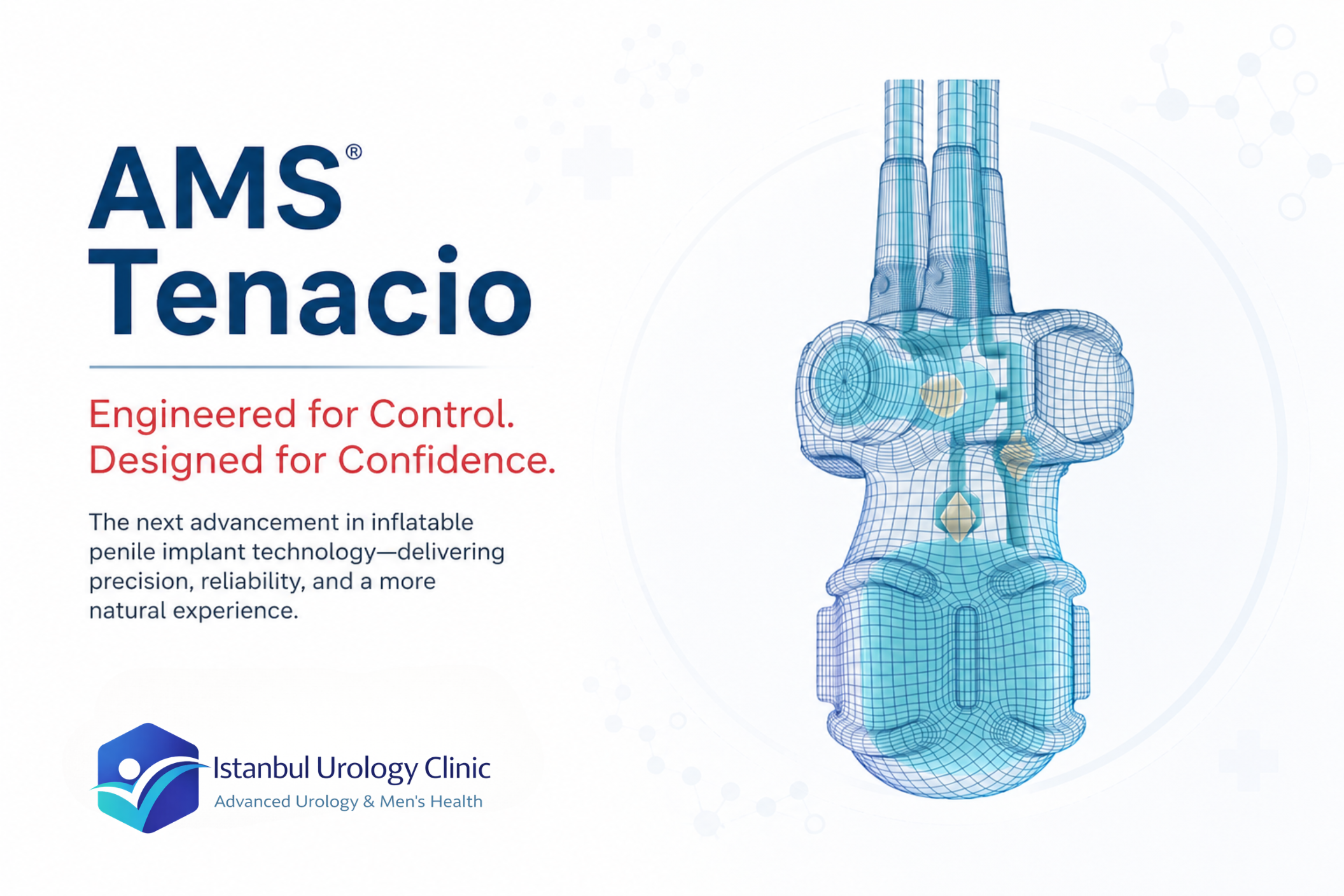
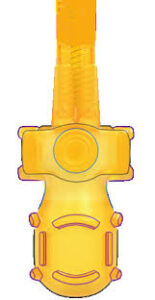
 Three concerns kept coming up in consultations with men considering an AMS 700 implant. Will I be able to squeeze the pump hard enough? What if I press the wrong part and can’t tell what’s happening? Will my hands get tired before I finish inflating? Boston Scientific heard the same concerns across the urology community for over a decade, and the AMS 700 TENACIO pump is what they engineered in response.
The redesign is not dramatic from the outside. The pump still looks like a scrotal pump, sits in the same place, and operates through the same squeeze-and-release principle. What changed is how the pump feels in the hand during the first weeks of use. Four practical improvements define it:
| What Changed | What It Means for You |
|---|---|
| Easier squeeze | Inflation takes noticeably less hand force than older AMS pumps. Men with weaker grip, whether from diabetes, age, or arthritis, can complete a full erection cycle without their hand getting tired. The medical benchmark: grip strength under 25 kg on a hand dynamometer, which was the practical limit on older AMS models, is now comfortably inside the safe range. |
| Button you can feel without looking | The deflation button is raised and has a clear “press point” that registers when the release activates. You feel it the moment it engages, instead of guessing whether you pressed hard enough. Older AMS pumps had a flat valve that often needed two hands or visual confirmation during the first weeks of practice. |
| No waiting between squeezes | Older pumps required a brief pause between squeezes so the pump could refill internally. TENACIO fills faster, so you can squeeze in a continuous rhythm without stopping. The inflation feels smoother and faster from start to finish. |
| More consistent feel over the years | Inflation and deflation now run through separate internal pathways instead of sharing one. The practical effect is that the pump feels the same in year ten as it does in week six. Less variation between cycles, less drift over time. |
What did not change is just as important to know. The cylinders inside your penis, the fluid reservoir in your abdomen, and the antibiotic coating protecting against infection are exactly the same as previous AMS 700 generations. If you had an older AMS implant ten years ago and remember the reliability, that part of the implant has not changed. The pump is the only component that got easier to live with.
The mechanical specifications matter only if they translate into a different experience in the patient’s hand during the first month of daily cycling. They do, and the change is most visible in three specific windows: the first guided activation around week four, the daily practice cycles through weeks four and five, and the first intercourse experience at week six.
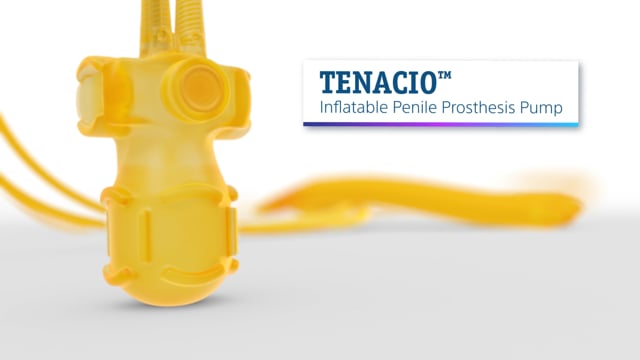
First activation (week 4)
Older AMS pump generations required the patient to locate the deflation valve visually before the first squeeze, because firm pressure on the wrong part of the pump created confusion about whether the system was inflating or releasing. The AMS 700 TENACIO pump geometry resolves this. The raised tactile button is palpable through the scrotal skin within seconds, and patients identify it correctly on the first attempt in nearly every guided activation we perform.
Our follow-up indicates a meaningful improvement in first-session activation success since TENACIO became the default pump. This pattern matches what surgeons reported across initial U.S. cases: in a multi-center survey published in The Journal of Sexual Medicine, 95% of implanting surgeons reported overall satisfaction with the TENACIO pump, with 77% specifically preferring its deflation button design over previous AMS pump generations.
Daily cycling (weeks 4 to 5)
The practice phase is where the lower bulb resistance changes the experience most. Patients with diabetic neuropathy or rheumatoid involvement of the fingers, who previously needed two to three squeezing sessions per day to maintain confidence, typically settle into one comfortable session because the inflation sequence does not produce hand fatigue. The faster refill response also means the pump is ready for the next squeeze before the patient feels the need to wait, which removes the rhythm-breaking pause that older generations carried.
First intercourse (week 6)
By the time the surgical team clears intercourse, the operational layer of the implant has moved into the background. The patients who benefit most from TENACIO are not the ones who notice the pump less during sex. They are the ones who never thought about it in the first place because the first month of practice removed pump handling as a source of anxiety entirely.
The exception worth naming directly: TENACIO does not solve severe hand weakness. Patients whose fingers are heavily deformed by long-standing rheumatoid arthritis, patients who can barely lift small objects after a stroke, or patients with Parkinson’s disease where tremor and stiffness prevent steady finger movement should not receive any inflatable implant, including TENACIO. The right device in those situations is a malleable implant, and our malleable penile implant guide covers when and why it’s the safer choice.
TENACIO is an easier inflatable pump, not a workaround for an inflatable contraindication.
Much of what changes with the AMS 700 TENACIO pump is invisible. It happens inside the pump, between squeezes, in the way the button engages. The patient himself usually does not describe it in technical terms during follow-up. He describes what surprised him.
The most common comment we hear during the first activation visit is that the pump is “lighter than I expected.” Men who arrived nervous about whether their hands would cooperate often complete the first full inflation without pausing once. The second comment, almost as common, is about the deflation button: patients say they “felt it click” rather than wondering whether they pressed it correctly. The third is harder to describe but easier to recognize. By the second week of practice, the pump stops being something they think about. They cycle the implant in the morning, again before sleep, and the act fades into routine the way putting on a watch does.
One patient with longstanding diabetes summarized it during his six-week follow-up: “I came in worried I’d be the guy who couldn’t figure out his own implant. By the time I left for home, it was the easiest part of my day.” That sentence captures what the engineering numbers are designed to deliver, and what the older AMS pump generations could not quite achieve for everyone.
The Three-Stage Mechanical Sequence
The pump operates through three discrete stages the patient learns to perform reliably by the end of week five. Each stage corresponds to a specific mechanical action inside the pump body, and understanding the sequence reduces hesitation during the first activation.
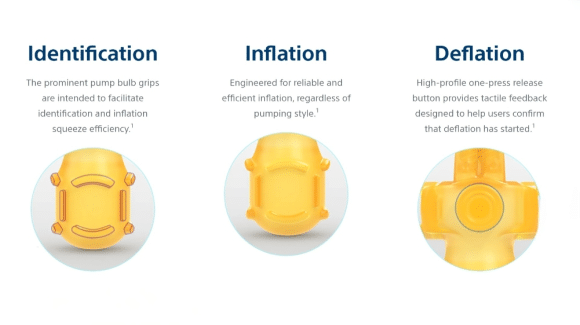
- Identification. The patient locates the pump within the scrotal pocket using thumb and index finger. The AMS 700 TENACIO pump bulb has a defined shape with raised lateral grips, which differentiate the pump from surrounding scrotal tissue by feel alone. The pump sits low in the dependent portion of the scrotum and falls into a consistent position when the patient stands, which is why patients typically identify it correctly on the first guided attempt.
- Inflation. Repeated squeezing of the bulb transfers fluid from the abdominal reservoir into the cylinders. A full erection typically requires eight to twelve squeezes depending on cylinder size and reservoir volume. The faster refill response between squeezes allows continuous rhythmic compression without pausing, and the lower bulb resistance means each squeeze requires less hand force than older AMS pump generations.
- Deflation. A firm press on the raised tactile button at the top of the pump opens the release valve and allows fluid to flow back into the reservoir. The button has a defined press depth, so the patient feels the engagement point rather than guessing whether the release has activated. Full deflation typically takes 20 to 30 seconds, after which the cylinders return to a soft flaccid state.
The same sequence applies to every inflatable penile implant on the market. What separates TENACIO is the tactile clarity of each stage in the first weeks after activation, when older pumps still felt unfamiliar.
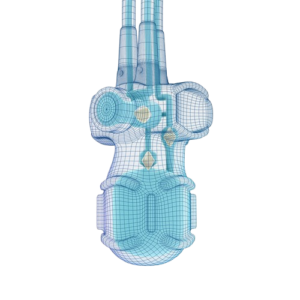 The AMS 700 platform has carried three distinct scrotal pump generations across its clinical history. The cylinders evolved separately, and the InhibiZone coating was added later, but the pump itself was redesigned twice.
Understanding the differences matters most for two groups: patients considering a revision who already live with an older AMS pump, and patients who read older forum threads or Reddit accounts and want to know whether those experiences still apply.
| Feature | MS Pump (pre-2010) | Tactile Pump (2010–2023) | TENACIO (2023–present) |
|---|---|---|---|
| Bulb resistance | Firmer, higher squeeze force required | Reduced compared to MS Pump | Lowest in the AMS line, minimal hand fatigue |
| Deflation feedback | Flat valve, often required visual confirmation | Improved valve, still required practice to locate | Raised tactile button, identifiable by feel alone |
| Refill response between squeezes | Slower, frequent pauses needed during inflation | Moderate, occasional pauses | Faster, continuous rhythmic squeezing possible |
| Typical learning curve | 4 weeks or longer | 3 to 4 weeks | 2 to 3 weeks in our follow-up |
| Current clinical role | Replaced. Found only in existing long-term implants from earlier years | Replaced as default. Some inventory still in circulation globally | Default scrotal pump for new AMS 700 cases at our clinic |
For patients considering revision because their older AMS pump has reached mechanical end of life or because they want easier daily handling, the upgrade is straightforward. The cylinders and reservoir can often be preserved if they are functioning correctly, and the pump alone is exchanged. The procedure is shorter than a full implant exchange and the learning curve resets to the AMS 700 TENACIO pump timeline rather than the older generation timeline. For the full revision pathway, see our penile implant revision surgery guide.
For patients reading older accounts of AMS 700 difficulty online, the practical answer is that descriptions written before 2023 do not reflect the implant being placed in new cases today. The platform name is the same. The hand experience is not.
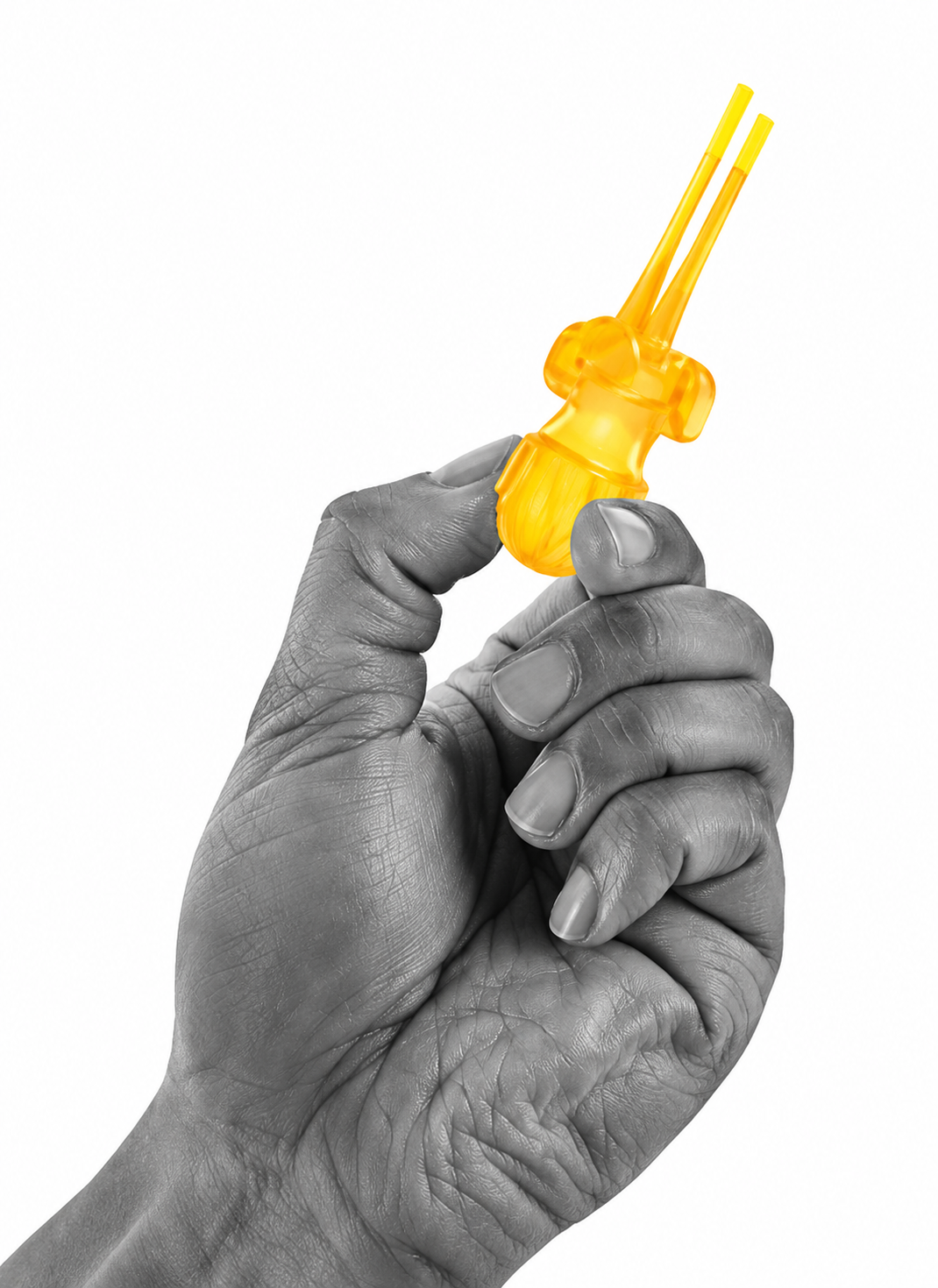 The patient profiles below reflect the actual clinical reasoning we apply during consultation when AMS 700 is already the right inflatable platform and the pump generation becomes the next decision. The list is not a marketing audience. It is a set of specific situations where the TENACIO redesign changes the practical outcome of the first month after activation.
Diabetic patients with weaker hands
Diabetes affects pump operation in two ways: numbness or reduced sensation in the fingers, and weaker grip when the disease has been ongoing for years. Patients who struggle to open jars, hold a pen with steady pressure, or release stiff car door handles often have trouble with older AMS pumps during the first weeks of practice. TENACIO is our default in this group whether or not diabetes is what caused the erectile dysfunction.
Patients with arthritis in the fingers
Rheumatoid arthritis affecting the knuckles and finger joints reduces both grip strength and the ability to hold pressure steady. TENACIO solves the grip-strength problem effectively. If holding pressure steady is also a challenge, the Coloplast Titan Touch may be the better choice, and the call is made during examination, not from a questionnaire.
Patients with mild hand weakness after a stroke
Patients who recovered most hand function after a stroke, but whose grip isn’t quite back to normal, often retain enough strength for an inflatable implant. With older AMS pumps, these patients were on the edge of what the pump required. TENACIO comfortably brings the effort back inside their safe range. Patients with significant hand weakness, where lifting small objects is difficult, should consider a malleable implant instead.
Older patients with age-related grip loss
Grip strength declines measurably after age 65 and drops more sharply after 75. Patients in this age range without any specific disease but who simply worry about pump handling are appropriate TENACIO candidates. The redesign was not engineered only for pathology. It serves the broader population whose hand strength is no longer what it was at 40.
Patients upgrading from an older AMS pump
Patients who lived with an MS Pump or Tactile Pump and want easier handling during revision surgery are direct candidates. The cylinders and reservoir can often be kept in place during the exchange, and the new learning curve resets to the TENACIO timeline.
When the main concern is not hand effort but scar tissue inside the penis, length recovery, or narrow internal anatomy, the pump generation becomes secondary and cylinder selection becomes the priority. The AMS 700 platform guide covers the full cylinder-first decision tree.