Penile fat transfer (lipofilling) is not an implant. It is living tissue. That one sentence decides whether the procedure makes sense for you, and it is the sentence most clinics skip before payment.
An implant is a fixed object. The shape on day one is the shape on year ten. Lipofilling penile enlargement works on biology, not engineering. Your body decides what to keep, and that decision is made during the first twelve months.
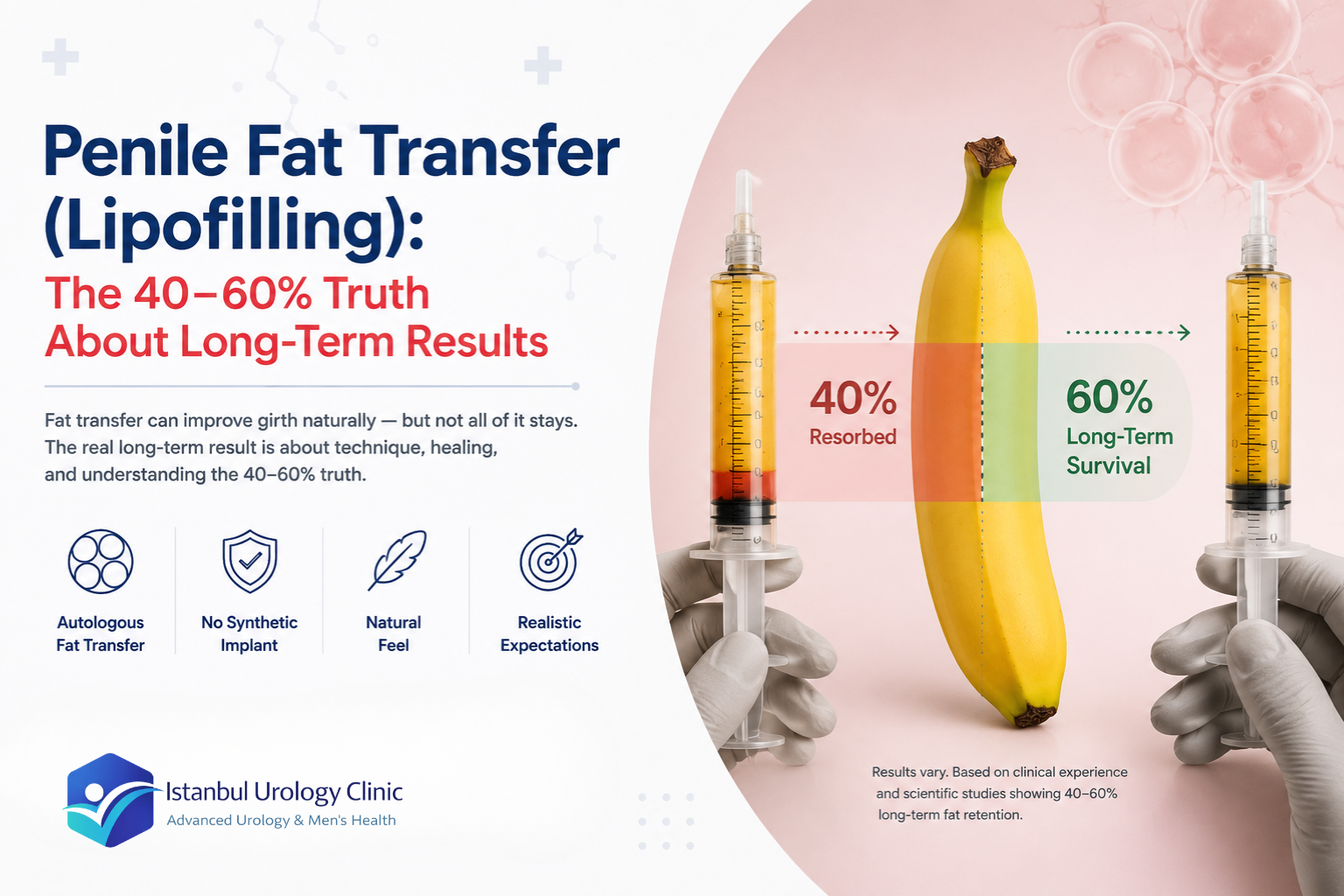
Forty to sixty percent of the injected fat is reabsorbed during the first year. The forty to sixty percent that stays becomes permanent shaft tissue and behaves like the tissue around it. This is not a flaw of penile fat transfer (lipofilling). It is the procedure.
The result feels natural because it is your own tissue, harvested from the lower abdomen or inner thighs and injected in thin layers around the penile shaft. Lipofilling penile enlargement is honest work when the reabsorption window is explained before surgery instead of after.
Key Points
- Penile fat transfer (lipofilling) increases girth using fat harvested from your own body, not synthetic material.
- The result settles at the twelve-month mark, after the body has reabsorbed forty to sixty percent of the injected volume.
- Lipofilling penile enlargement does not change length, does not affect erectile function, and does not involve the erectile chambers.
- Suitability depends on having enough harvestable fat. Very lean patients are usually advised toward a different girth procedure.
What Penile Fat Transfer (Lipofilling) Actually Is
Penile fat transfer (lipofilling) is a girth procedure that uses your own fat as the filler material. Two surgical sites are involved in the same operation: a donor site, where fat is harvested through small incisions, and the recipient site, where that fat is processed and injected into the layer between the penile skin and the underlying tissue. The erectile chambers are not touched. Erection length and erectile function are unchanged.
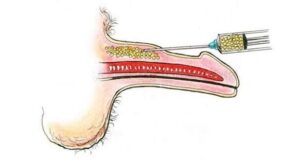
Lipofilling penile enlargement increases circumference, not length. Patients who want visible flaccid length, a stronger erect projection, or correction of buried penis anatomy need a different operation. Penile fat transfer (lipofilling) addresses one dimension only: shaft thickness, measured at the mid-shaft after healing is complete around the twelve-month mark.
The procedure is performed under anesthesia and usually requires one night of hospital observation. Donor site selection depends on where you have enough harvestable fat without leaving a visible defect. Lean patients with low body fat are often not suitable candidates, which is one of the first things confirmed during evaluation rather than during the surgery itself.
The Reabsorption Reality: How Your Body Decides the Final Result
Every fat graft, anywhere in the body, goes through the same biological sequence after it is injected. The newly placed fat has no immediate blood supply. It survives the first weeks by drawing nutrients from the surrounding tissue while new capillaries form. The cells that successfully connect to that new blood supply stay. The cells that do not connect are reabsorbed by the body. This is true in facial fat grafting, breast fat grafting, and penile fat transfer (lipofilling) alike.
The reabsorption percentage in lipofilling penile enlargement is consistent with the broader fat grafting literature. Roughly forty to sixty percent of the injected volume is reabsorbed during the first twelve months. This is why experienced surgeons inject in controlled excess at the time of surgery. The volume you see two weeks after the procedure is not the final result. The volume you see at one year is.
40–60%
Of the injected fat is reabsorbed during the first year. The remainder becomes permanent shaft tissue.
Predictability of penile fat transfer (lipofilling) depends on three factors: the quality of the harvested fat, the technique used to layer it (thin, even passes rather than concentrated pockets), and patient-side variables like weight stability and circulation. Patients who lose significant weight in the year after surgery often see the graft volume drop further, because the grafted fat behaves like the fat at the donor site.
Common MythPenile fat transfer is permanent forever, with no change after the first month.
RealityThe volume you see at week two is not the result you keep. Forty to sixty percent of the injected fat is reabsorbed during the first year. What remains at month twelve is permanent and behaves like normal shaft tissue.
Realistic Results from Lipofilling Penile Enlargement
The realistic gain after penile fat transfer (lipofilling) sits between two and a half and five centimeters of added girth, measured at the mid-shaft once healing is complete. Some patients gain slightly less, some slightly more, depending on harvestable fat volume, tissue elasticity, and how the body responds during the reabsorption phase. These numbers describe what is observed at twelve months, not what is observed at two weeks.
The table below shows how lipofilling penile enlargement evolves over the first two years. The pattern is the same for most patients: a large volume on day one, a noticeable drop during months one to six, stabilization between months six and twelve, then a permanent plateau.
← Swipe to see full table →
| Timeline | What You See | What Is Happening Biologically |
|---|
| Day 1 to Week 2 | Largest visible volume, with swelling that exaggerates the gain | Injected fat is in place but has no blood supply yet. Swelling adds apparent size. |
| Weeks 3 to 8 | Volume begins to drop as swelling resolves and reabsorption starts | Cells that did not connect to new capillaries are cleared by the body. |
| Months 3 to 6 | Visible reduction from the initial post-op size; concern is normal at this stage | Reabsorption is in its active phase. Surviving fat is building permanent tissue. |
| Months 6 to 12 | Volume stabilizes; the surviving fat becomes the result you keep | Grafted fat is fully vascularized and behaves like native shaft tissue. |
| Beyond 12 Months | Permanent result, subject only to body weight changes | No further reabsorption. Volume now follows your overall fat distribution. |
The most common dissatisfaction with penile fat transfer (lipofilling) does not come from poor surgical technique. It comes from comparing the month-twelve result against the week-two result, instead of against the pre-surgery starting point. The volume drop between week two and month twelve is normal biology. The gain that matters is the one measured against where you started.
The patients who are most satisfied at the one-year follow-up are the ones who understood the twelve-month math before surgery. They do not panic at month three when volume drops. They do not measure against the swollen week-two image in their phone. They measure against where they started, and that is where the honest gain is visible.
ÖO.
Prof. Dr. Özkan Onuk
Professor of Andrology · Istanbul Urology Clinic
Who Is and Isn't a Good Candidate
Penile fat transfer (lipofilling) candidacy is decided in evaluation, not on a product page. Three factors carry most of the weight: harvestable fat at a usable donor site, stable body weight, and untouched recipient tissue with no previous fillers, PMMA, or grafting work.
The patients who get the cleanest results from lipofilling penile enlargement are not the ones with the highest expectations. They are the ones whose anatomy and life circumstances match what the procedure can biologically deliver.
- Ideal candidate
Stable body weight, adequate donor-site fat in the lower abdomen or inner thighs, intact erectile function, untouched shaft tissue, and a girth-only goal with realistic understanding of the reabsorption window. - Needs detailed evaluation
Previous fillers, PMMA, or fat grafting in the recipient area, planned weight loss within the next year, borderline donor-site volume, or interest in combining penile fat transfer (lipofilling) with lengthening surgery in the same operation. - Not a candidate
Very low body fat with no usable donor site, primary goal of length or erectile improvement, active skin infection at either surgical site, unstable medical conditions, or expectations of a permanent fixed result with zero reabsorption.
A common reason men are advised away from lipofilling penile enlargement is anatomy: there is simply not enough fat to harvest without leaving a visible donor-site defect. In those cases, a silicone implant such as Peniflex delivers the same girth goal without depending on harvestable fat. The choice is not about which procedure is better. It is about which one your body is set up for.
Penile fat transfer (lipofilling) is performed under general or spinal anesthesia and takes between ninety minutes and two hours depending on donor-site preparation and the volume planned for injection. The operation involves four sequential stages, performed in the same surgical session by the same team.
1
Harvesting
Fat is removed from the donor site through small incisions, usually three to four millimeters wide, using a gentle low-pressure technique. The goal is to collect viable fat cells, not maximum volume. Aggressive harvesting damages the cells and reduces survival rate.
2
Processing
The harvested fat is purified to separate viable fat cells from blood, oil, and damaged tissue. The cleaner the prepared graft, the higher the percentage that survives reabsorption. This stage is the difference between a graft that retains forty percent and one that retains closer to sixty.
3
Layered Injection
The processed fat is injected through small entry points along the penile shaft, in thin even passes rather than concentrated pockets. The injection layer sits between the skin and the deeper structures, well above the erectile chambers. Even distribution is what produces a smooth circumferential gain instead of palpable lumps.
4
Shaping and Closure
Once the planned volume is injected, the surgical team manually contours the graft to ensure symmetry along the shaft. Incisions at both the donor site and the recipient site are small enough to close with sutures that dissolve on their own. No drains are placed in standard cases.
Lipofilling penile enlargement is performed at JCI-accredited Biruni University Hospital with an overnight observation stay. International patients receive their full post-operative protocol in writing before discharge, in their own language.
Recovery Timeline: From Donor Site to Final Result
Recovery after penile fat transfer (lipofilling) involves two surgical sites that heal on different timelines. The donor site usually feels more uncomfortable in the first week than the recipient site, because liposuction touches a wider tissue area. The recipient site causes minimal pain but requires careful protection to avoid disturbing the graft before it establishes its blood supply.

The first forty-eight hours include one night of hospital observation, a compression garment on the donor site, and a loose protective dressing on the shaft. Walking is encouraged from the first day. Heavy lifting and direct pressure on either site are avoided.
At day seven, the first follow-up reviews dressings, sutures, and overall healing. Most international patients are cleared to fly home between day five and day seven, depending on how the early healing progresses. Compression on the donor site continues at home.
Around week six, sexual activity including masturbation is reintroduced with surgeon approval, and demanding exercise resumes gradually. The shaft volume at this stage is larger than the final result. By month twelve, reabsorption is complete and the volume present is the permanent result of lipofilling penile enlargement, unchanged unless body weight shifts significantly.
The phases below describe what is happening biologically during each window. Concern at the wrong moment, especially during the reabsorption-heavy months three to six, is the most common reason patients second-guess a procedure that is healing on schedule.
Week 1
Donor-Site Recovery Dominates
Bruising and tenderness at the abdomen or thighs are normal. Shaft swelling exaggerates the apparent gain. No work, no exercise, no sexual activity. Compression on the donor site is continuous.
Weeks 2 to 6
Graft Vascularization
Injected fat is forming new connections with the surrounding blood supply. This is the most fragile window for the graft. Pressure, friction, and high-impact movement are avoided. Desk work resumes during this phase.
Months 2 to 6
Active Reabsorption
The body clears fat cells that did not connect to a blood supply. Visible volume drops during this window. The drop is expected, not a complication. Surviving fat is becoming permanent shaft tissue.
Months 6 to 12
Stabilization and Final Shape
Volume settles into its long-term level. By month twelve, what you see is what you keep. Weight stability during this year protects the result. Significant weight loss reduces graft volume in proportion.
Patients who return at the one-year mark satisfied are almost always the ones who tracked their progress against month twelve, not against the swollen post-operative image. The biology of penile fat transfer (lipofilling) rewards patience more than any other girth procedure.
Penile Fat Transfer vs Other Girth Options
Men comparing girth procedures usually weigh four options in the same search session: hyaluronic acid fillers, penile fat transfer (lipofilling), the Peniflex silicone implant, and the Penuma silicone implant. The honest comparison is not which one is best, but which one matches your tissue, your tolerance for biology, and how often you are willing to repeat the conversation.
The table below groups the four options by what actually differs between them: where the volume comes from, how permanent it is, and what your body does to it after surgery.
← Swipe to see full table →
| Aspect | Fat Transfer (Lipofilling) | Hyaluronic Acid Filler | Peniflex Implant | Penuma Implant |
|---|
| Material | Your own fat | Synthetic gel | Soft silicone implant | FDA-cleared silicone implant |
| Permanence | Partial. 40 to 60% of injected fat is reabsorbed in year one. The rest is permanent. | Temporary. Body reabsorbs the filler over 12 to 18 months. | Permanent. Fixed result, no reabsorption. | Permanent. Fixed result, no reabsorption. |
| Feel | Natural, biological tissue | Softer initially, breaks down unevenly | Soft silicone, designed for flexibility | Firmer, structured profile |
| Procedure type | Surgery under anesthesia, two surgical sites, one night in hospital | In-clinic injection, no hospital stay | Surgery under anesthesia, one night in hospital | Surgery under anesthesia, one night in hospital |
| Maintenance | Occasionally a second session for volume retention | Repeat sessions required to maintain result | None expected after healing | None expected after healing |
| Best for | Patients who want their own tissue and accept the reabsorption window | Trial of added girth before committing to surgery | Permanent girth, soft feel, untouched tissue | Permanent girth plus visible flaccid presence |
The decision usually narrows to two questions. The first is whether you want your own tissue or a manufactured device, and the second is how you feel about a result that biology will adjust over twelve months versus a result that is fixed on day one. Patients who choose penile fat transfer (lipofilling) consistently choose it for the first reason. Patients who choose Peniflex or Penuma choose them for the second.
Risks, Limits, and What Lipofilling Cannot Do
Penile fat transfer (lipofilling) is a low-complication procedure when performed by an experienced team on appropriate candidates, but no surgery is without risk. The honest version of the risk conversation covers three categories: technical complications, expectation mismatches, and limitations that exist regardless of who performs the surgery.
Technical complications. Asymmetry between the left and right sides of the shaft, palpable nodules where fat has clustered instead of spreading evenly, and minor irregularities along the surface are the most reported issues. Most are mild and resolve as the graft remodels through the first year. A small percentage of patients benefit from a second session to refine contour, usually performed at the twelve-month mark once the final volume is known.
Donor-site issues. Bruising, temporary numbness, and mild contour irregularity at the abdomen or thighs are normal during the first weeks. Significant donor-site complications are uncommon when the harvest is gentle and the volume removed is proportional to what is available. Aggressive harvesting from a lean donor area is the cause of most visible defects, which is why candidacy is filtered before surgery.
Expectation limits. Lipofilling penile enlargement does not change length. It does not strengthen erection. It does not correct buried penis anatomy or scrotal webbing. Patients with these concerns need a different operation, sometimes in combination with penile fat transfer (lipofilling) and sometimes instead of it.
Before Choosing a Clinic
Avoid clinics that quote a fixed centimeter gain in advertising, refuse to discuss the reabsorption window, do not separate donor-site and recipient-site recovery in their protocol, or schedule penile fat transfer (lipofilling) without a preoperative evaluation of donor-site fat. These are the same red flags that produce the dissatisfied revision cases other surgeons later have to correct.
Combining Penile Fat Transfer with Lengthening Surgery
Most international patients who travel for girth surgery want length addressed in the same trip. The combination of penile fat transfer (lipofilling) with suspensory ligament release is the most common combined operation our team performs, because length and girth solve different problems and one trip saves a second recovery, a second flight, and a second healing window.
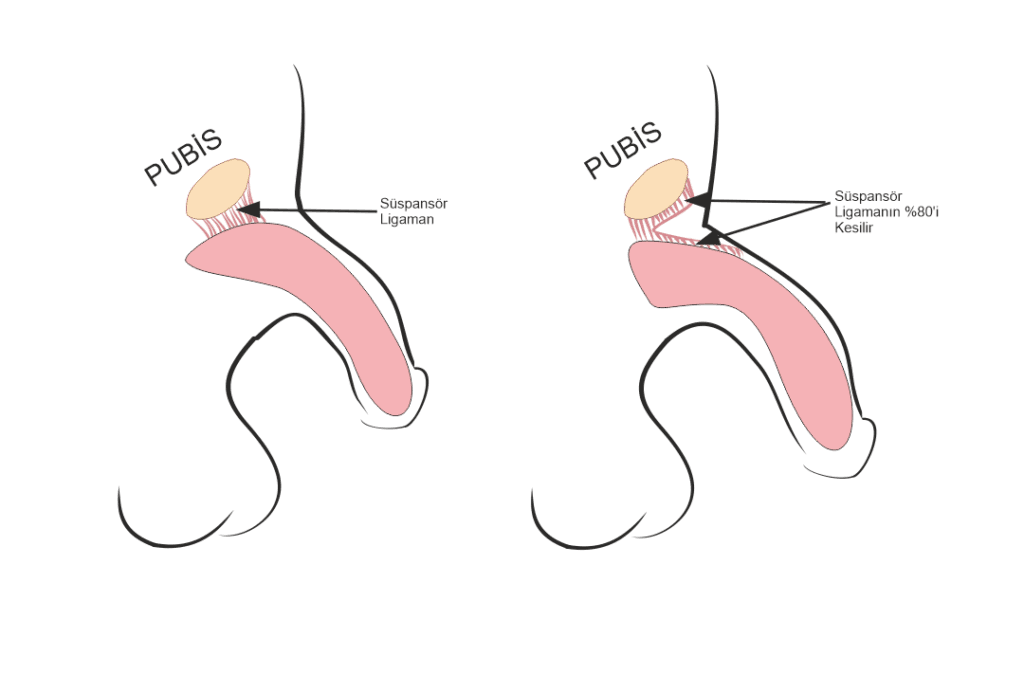
The two procedures work on entirely different layers of anatomy. Lengthening releases a ligament inside the pubic area to bring hidden internal shaft forward. Lipofilling penile enlargement adds volume to the layer between the skin and the underlying tissue along the external shaft. Neither procedure interferes with the other, and they can be performed in the same surgical session under the same anesthesia.
The combined recovery follows the longer of the two timelines. Donor-site recovery from the fat harvest and incision-site recovery from the ligament release both resolve within the first weeks, while the graft itself reaches its permanent volume around the twelve-month mark. Patients who want length, girth, and a single recovery period choose this combination over two separate trips. The full range of penile enlargement surgery options is matched to anatomy and goals during the preoperative consultation, where the final decision between standalone and combined procedures is made.
For patients whose primary concern is length rather than girth, the standalone penile lengthening surgery guide covers the technique, expected gain, and recovery in detail.