
If you have been comparing girth options for a while, you have probably noticed the same pattern. Fillers fade. Fat reabsorbs. The search for something that holds its shape keeps coming back.
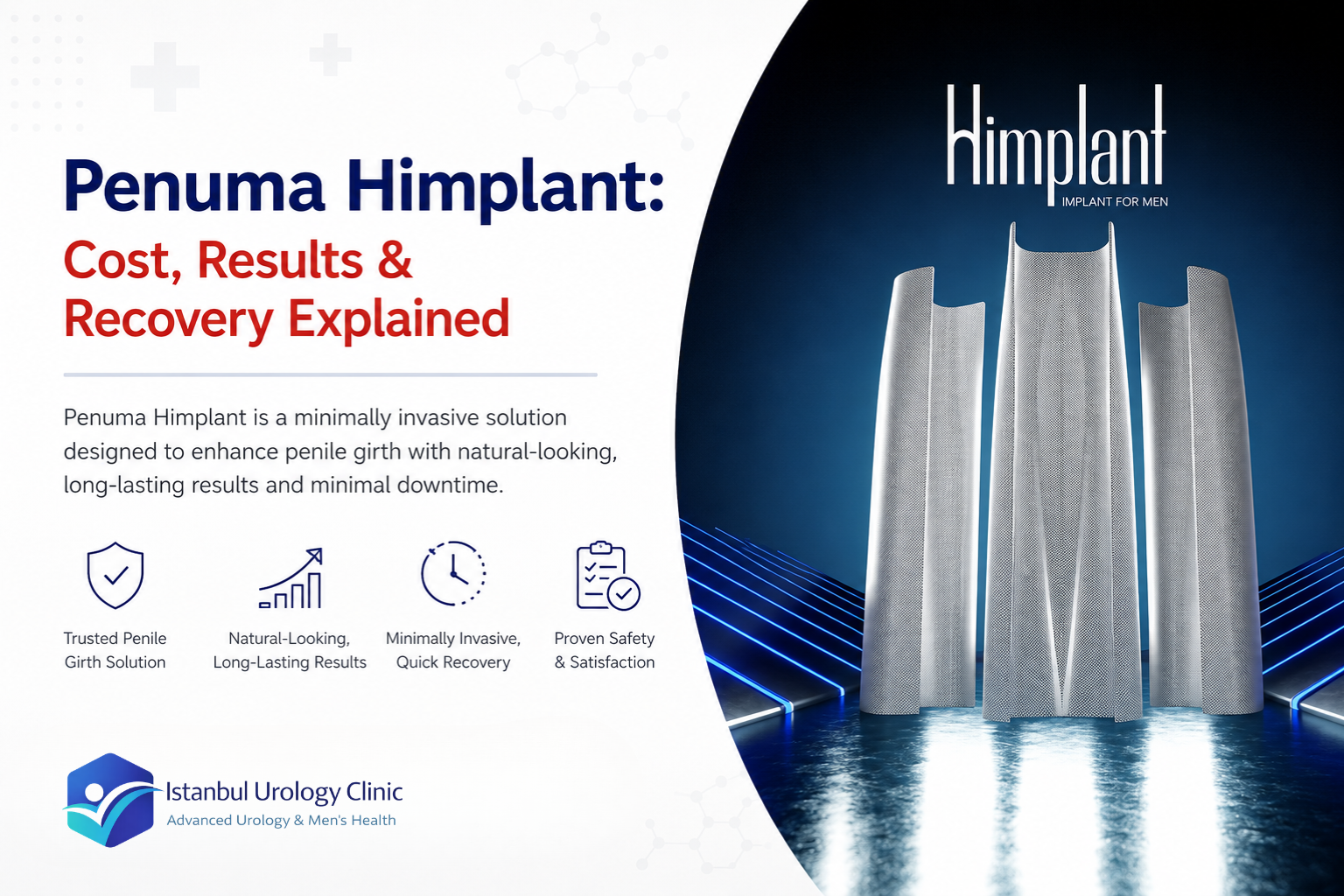
Penuma Himplant is a soft silicone implant placed under the skin of the penis. It adds permanent girth, and equally important, it gives visible length in the flaccid state. That second point is where it diverges from every other girth option, including the Peniflex implant, which by design stays soft and conforms to the natural relaxed shape.
Penuma is also the only cosmetic penile implant of its kind to receive FDA clearance, a regulatory review for safety, manufacturing standards, and intended use. That clearance is meaningful but not a full answer on its own. The surgeon, the patient selection, and your expectations carry equal weight in deciding whether this is the right procedure for you.
This article is for the man who is seriously comparing Penuma against alternatives and wants a clear, honest read on what it does, what it does not do, who actually benefits, and what it costs in Turkey. No before-and-after framing, no transformation language, no pressure to book. What follows is the same conversation we would have if you were sitting across the desk in our office.
Penuma sits within the full range of penile enlargement options, and choosing between them is the part of the decision that takes the most thought. The procedure itself is short. The recovery takes six weeks. The section below begins with the question most patients ask first: what does FDA clearance actually mean.
- What FDA Clearance Really Means for Penuma Patients
- The Flaccid State: Where Penuma Stands Apart
- Is Penuma Himplant Right for You? Five Tests
- Sizing: Bigger Isn't Better
- Inside the Penuma Himplant Procedure, Without the Textbook
- The First Six Weeks After Penuma Himplant: A Realistic Recovery Map
- What "Permanent" Actually Means in the Long Term
- When Each Option Wins: Penuma vs Your Alternatives
- Next Step
- What FDA Clearance Really Means for Penuma Patients
- The Flaccid State: Where Penuma Stands Apart
- Is Penuma Himplant Right for You? Five Tests
- Sizing: Bigger Isn't Better
- Inside the Penuma Himplant Procedure, Without the Textbook
- The First Six Weeks After Penuma Himplant: A Realistic Recovery Map
- What "Permanent" Actually Means in the Long Term
- When Each Option Wins: Penuma vs Your Alternatives
- Next Step
What FDA Clearance Really Means for Penuma Patients
Penuma Himplant is the only cosmetic penile implant of its kind to receive FDA clearance. It was first cleared in 2016 under the agency’s 510(k) pathway, which means the device demonstrated safety, manufacturing consistency, and intended-use criteria comparable to existing medical devices already on the market. You can verify the clearance directly in the FDA 510(k) clearance record.
That distinction matters because most enlargement products sold worldwide, particularly online and in unregulated markets, have never been reviewed by any health authority. FDA clearance separates a regulated medical device from a commercial product with no oversight behind it.
But clearance is not a guarantee of results. It says nothing about whether you specifically will get the outcome you want, and it does not eliminate the risks that come with any surgical procedure. The same Penuma Himplant in two different surgical hands, on two different patients, will produce two different results.
That is the part most online sources skip. The FDA approves the device. It does not approve the operation, the surgeon, the patient selection, or the post-operative care. Those are the variables that decide whether Penuma works well for you, and they are the variables we evaluate during consultation.
Treat FDA clearance as a baseline credential, not a finish line. It puts Penuma in a different category from unregulated enlargement products, but the actual quality of your result depends on what happens after the box is opened in the operating room.
The Flaccid State: Where Penuma Stands Apart
Most of your day is not spent erect. Walking, sitting, the shower, the locker room, the moment before intimacy starts. These are all flaccid moments. Most patients who arrive unhappy with size say something close to “I look smaller when relaxed than I think I should.” That is a flaccid problem, not an erection problem.
Penuma Himplant is built for this specific concern. The soft silicone shell adds external volume that holds its shape regardless of whether the penis is erect or relaxed. In the flaccid state, the shaft visibly fills more, hangs more naturally, and projects more in everyday situations. The change is most noticeable in clothing, when undressed, and in the early moments of intimacy, before any erection is involved.
This is fundamentally different from what Peniflex, fillers, or fat transfer do. Peniflex was engineered to stay soft and move with the body, which is excellent for comfort but means the flaccid state does not change much. Fillers gradually break down. Fat transfer reabsorbs unevenly. Penuma is the only one of the four that holds shape stably enough to change how the penis looks at rest, year after year.
The honest framing matters here because this section attracts patients who hope for more than the procedure delivers.
- Adds visible volume that holds shape at rest
- Shaft projects more, hangs more visibly in clothing
- Stronger presence when not erect, year after year
- For patients who want the way it looks when not erect to change
- Stays soft, conforms to natural relaxed shape
- Same flaccid silhouette as before, with added girth beneath
- Looks natural at rest, no projection change
- For patients who want girth added without changing daily appearance
What Penuma does not do is increase the length of your erection. The implant sits outside the erectile chambers and does not change how those chambers fill. If your concern is erection length, the surgery you are looking at is a ligament release, not an implant. We come back to that point in the criteria section, because matching the goal to the procedure is what decides everything.
Is Penuma Himplant Right for You? Five Tests
Candidacy for Penuma is not a checklist a doctor ticks off. It is five personal questions you answer for yourself first, and most of them do not need a medical opinion. What needs a medical opinion is what comes after.
If you have buried penis anatomy: excess pubic fat or skin coverage can make the penis look smaller than it actually is. Penuma helps in selected cases by improving visible girth and projection, but if buried penis is the main issue, pubic fat reduction or skin adjustment often gives a stronger visual result, either before the implant or instead of it.
If you have previous PMMA or permanent fillers: these materials change how the tissue accepts a new implant. The case becomes a revision with different planning, sometimes staged across two surgical sessions. Previous fillers or PMMA require a different evaluation that takes the existing material into account before the conversation can move forward.
These five criteria are not a binary screen. They are five personal decisions that have to align before the implant becomes the right answer, and the second through fifth are usually harder than the first.
Sizing: Bigger Isn't Better
Penuma Himplant is available in Large, XL, and XXL. The patient’s first instinct is to choose the biggest size available. That instinct is usually wrong.
The right size is the size your tissue can accept without strain. An implant matched to your anatomy heals smoother, looks more proportional, and carries a lower complication rate over time. An implant that is too large for the tissue stretches the skin, heals unevenly, makes the edges of the device visible, and significantly raises the chance of revision surgery later.
Several factors decide which size is appropriate. Shaft dimensions, skin elasticity, tissue mobility, previous procedures, body weight, and any buried penis anatomy all play a role. The decision is not made from preference, and it is not made from the patient’s preferred number on paper. It is made from what the tissue can carry safely.
This is one of the places where patient and surgeon priorities sometimes diverge. The patient wants the largest result. The surgeon’s job is to deliver the largest result that the anatomy can hold without compromising the final look or the long-term outcome. When those two priorities clash, the surgeon’s decision protects the patient from a revision they did not want.
The right Penuma Himplant disappears into your anatomy. The wrong one announces itself.
In practice, we usually aim for the largest implant size your anatomy can safely support. The goal is not to choose a conservative size, but to maximize the result without creating excess tension, visible implant edges, wound-healing problems, or a higher risk of revision surgery.
Inside the Penuma Himplant Procedure, Without the Textbook
Penuma surgery is performed in a sterile hospital under general anesthesia, or in selected cases under spinal anesthesia. The procedure itself takes 45 to 60 minutes. Revision cases, combined procedures, or scar correction take longer. After the operation, you stay one night under observation, and international patients move to the hotel the following morning with detailed recovery instructions.
The incision is short and placed near the base of the penis, in the area where the skin meets the scrotum. It is not made on the shaft. From that incision, the surgeon creates a precise pocket beneath the penile skin, large enough to accept the implant but not larger. The implant is positioned, adjusted to the anatomy, and fixed in place to minimize early movement during healing. The incision is closed in layers, and a small drainage tube is sometimes used in the first days to reduce fluid collection.
What matters more than the operative steps is what surrounds them. Pre-operative marking decides where the implant sits. Sizing decides whether the result holds. Closure quality decides what the scar looks like in six months. Each of these is a place where care, not speed, defines the result.
Honest View of the Risks
No surgery is risk-free, and Penuma is not an exception. The honest picture has four categories.
The first weeks bring swelling, bruising, firmness, and temporary sensitivity changes. These resolve on their own and are expected. The second category is less common, including infection, prolonged swelling, asymmetry, delayed wound healing, or dissatisfaction with the cosmetic result. Most of these are managed conservatively when caught early. The third category is revision surgery, where the implant is repositioned, resized, or its surrounding tissue corrected. This is a small percentage of cases but a real one. The fourth category is implant removal, which is uncommon and usually offered when a major complication develops or when the patient changes their mind long-term.
The strongest single factor that lowers all four categories is the front end of the process. The right candidate, the right size, the right surgical hands, and the right post-operative care. Most of the problems that show up later were visible at the consultation, if someone was looking carefully enough.
Who Should Not Have Penuma
Some cases are clear postponements, and some are clear no’s. Uncontrolled diabetes with poor wound healing capacity. Active skin or urinary infections at the time of surgery. Significant cardiac or anesthesia risks that have not been stabilized. Bleeding disorders that have not been planned around. Severe obesity that affects both healing and buried penis anatomy. Heavy daily smoking that has not been paused before surgery.
The psychological screen matters as much as the medical one. Patients expecting unrealistic size changes, fixated on specific measurements despite normal anatomy, anxious to a degree that interferes with healing, pressured by a partner rather than acting on their own decision, or expecting the implant to resolve broader life or relationship problems are usually better served by waiting, by a different conversation, or by a different procedure altogether.
The men we postpone today are often the men we operate on a year later, once a medical condition is controlled, weight goals are met, or expectations have settled. Saying not yet is not the same as saying no.
📺 Video courtesy of Vimeo
The First Six Weeks After Penuma Himplant: A Realistic Recovery Map
Recovery happens in defined phases. The early weeks are about protecting the area while the tissue heals. The middle weeks are about returning to normal life. The final shape continues to refine for several months after the visible recovery is complete.
The Immediate Phase
You are discharged from the hospital after one night. The area feels swollen, firm, and heavier than usual, which is expected. Pain is managed with prescribed medication. Movement is limited to light walking. Supportive underwear keeps the implant settled in position.
The Most Sensitive Phase
Swelling and bruising are at their peak. Spontaneous overnight erections may cause temporary discomfort. The focus is wound care, rest, and prescribed medications. No work, no exercise, no driving.
The Turning Point
Swelling decreases noticeably. Movement becomes easier. Most patients return to desk work or remote work during this window. Minor firmness or asymmetry is still common and does not reflect the final result.
Returning to Normal – Including Sex
Tissues settle and the contour becomes more defined. Most daily activities resume. Sexual activity, including masturbation and intercourse, is cleared around week six with surgeon approval. Demanding physical exercise is reintroduced gradually after the six-week follow-up.
The Final Result Settles
The implant is fully integrated with the surrounding tissue. By the end of month three, swelling has fully resolved and the shape you see is the shape you keep. Small refinements continue for several more months, but most patients stop thinking about the implant and start noticing the result.
International patients typically receive clearance to fly home around days five to seven, depending on how the early follow-up goes. Long flights are easier with hydration, periodic walking, and loose clothing. Recovery from Penuma surgery does not stop at the airport, and follow-up continues remotely for weeks afterward.
What "Permanent" Actually Means in the Long Term
Permanent is the word that sells Penuma Himplant over fillers and fat transfer. It is also the word that needs the most honest definition.
The implant itself is permanent by design. The medical-grade silicone does not dissolve, does not migrate under normal conditions, and does not lose volume the way injected materials do. The shape you reach at the end of recovery is the shape you keep, indefinitely, in most patients.
That said, permanent does not mean every patient keeps the implant forever. A small percentage choose revision surgery, where the implant is repositioned, resized, or its surrounding tissue corrected. A smaller percentage choose removal, usually when a significant complication develops or when life circumstances change long after the surgery. Long-term case series describe intact implants beyond five years in most patients, but the published data on cosmetic enlargement is not as deep as the data on inflatable implants for erectile dysfunction, and we say so honestly during consultation.
What this means for you is simple. Penuma Himplant is built to stay. Most of the patients we operate on at 40 still have their implant at 50. Some choose revision. A few choose removal. The implant is also designed to be surgically removable if the decision changes, which means you are not making a one-way decision in the way some patients fear.
The honest framing is this. Permanent describes the implant’s design and behavior, not a guarantee that you will never want to revisit the decision. Body image evolves. What feels right at 35 may feel different at 55. The technology accommodates that.
When Each Option Wins: Penuma vs Your Alternatives
Comparing Penuma Himplant against a single alternative misses how the decision actually happens. Most patients arrive evaluating four or five options at once, and the honest comparison shows that each one has a specific situation in which it is the right answer.
| Option | When it wins | When it does not |
|---|---|---|
| Penuma | Permanent girth plus stronger flaccid presence, intact erections, ready for surgery and a six-week recovery | If your primary goal is erection length, or if you have moderate to severe erectile dysfunction |
| Peniflex | Same girth goal as Penuma, but you prioritize Peniflex’s softer profile and natural movement focus over visible flaccid change | If a long FDA clearance track record is a decisive factor for you, or if flaccid presence is the main goal |
| Hyaluronic acid fillers | You want a temporary trial before committing to surgery, with minimal downtime | If repeating treatments every 12 to 18 months is not for you |
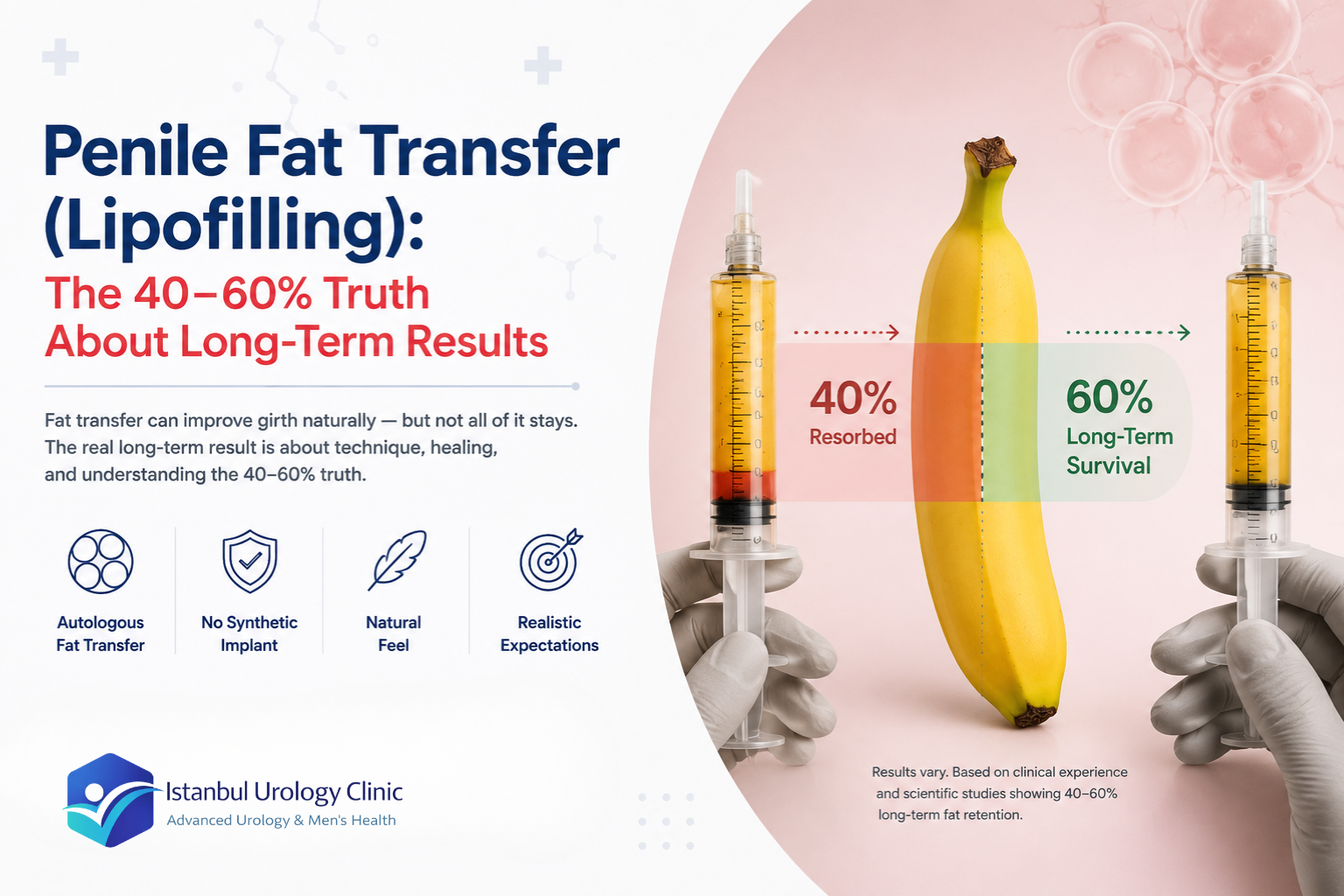
| Fat transfer | You prefer using your own tissue and are comfortable with 40 to 60 percent reabsorption | If long-term volume stability is the priority |
| Lengthening surgery | Your primary goal is visible length, not girth | If girth is the actual concern, this is a different procedure altogether |
| No procedure | Dissatisfaction is psychological more than anatomical, and counseling is the missing piece | If a careful evaluation confirms that real anatomical dissatisfaction is present |
Most patients arrive thinking the choice is between Penuma and one alternative. The more useful question is which row in this table describes you, and the answer is sometimes not the procedure you initially searched for.
Frequently Asked Questions
Next Step
If you have read this far, you have done more research on Penuma than most patients arrive with. The next step is a private consultation where the general becomes specific: your anatomy, your goals, your timeline, and an honest assessment of what is possible and what is not. No automatic recommendation. No pressure. If Penuma is not the right answer for you, we will tell you.