
Choosing between Rigicon, AMS 700, and Coloplast Titan is one of the harder decisions in prosthetic urology, and it is the question that brings most patients to consultation already half-decided in the wrong direction. The names sound interchangeable. The marketing material from all three manufacturers describes implants that look mechanically similar on paper. What separates them is not visible until you sit across from a surgeon who has placed all three.
The honest concern behind the Rigicon penile implant question is rarely “does it work.” It is whether Rigicon is a serious clinical choice or the cheaper alternative patients should quietly skip in favor of an older brand with a deeper track record. The answer in our practice is that Rigicon is not the cheaper alternative, and treating it as such is a misread of what the company actually engineered.
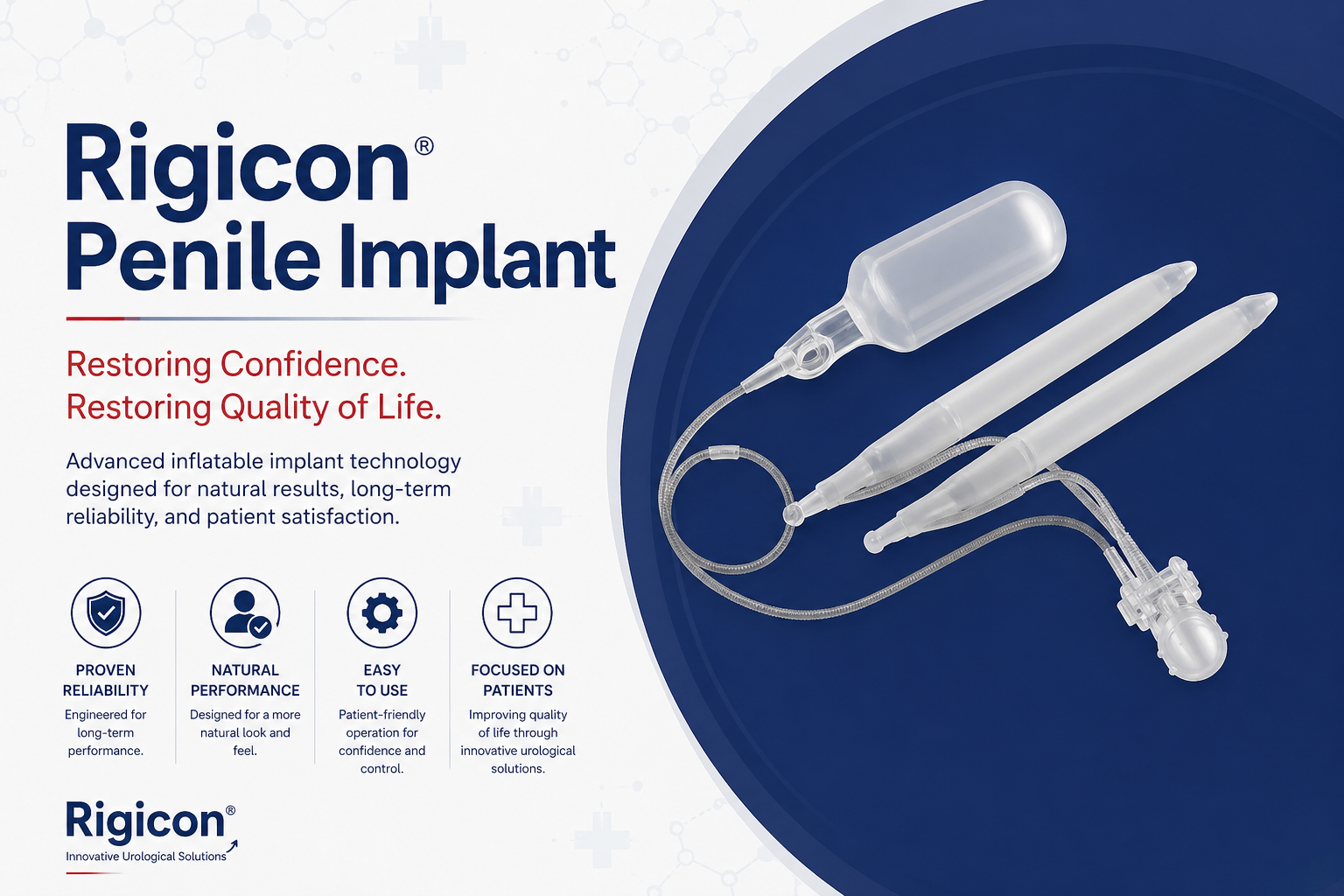
Rigicon entered the prosthetic urology market more recently than Boston Scientific or Coloplast, and that is the genuine question worth asking. What the company did with that newness is build on the mechanical lessons of the older platforms rather than reinvent them. The hydraulic architecture is the same proven three-piece concept refined since the 1970s. The cylinder, pump, coating, and reservoir choices address specific clinical problems the older brands have not fully resolved.
This guide walks through what Rigicon engineered differently, when those engineering choices translate into a clear clinical advantage, how Rigicon compares against AMS 700 and Coloplast in real patient scenarios, and what the lifetime warranty actually covers. It is the conversation our surgical team has during consultation, written down.
- Why Rigicon Is Our Most-Placed Inflatable Today
- Engineering Choices That Matter in the Operating Room
- The "Newer Brand" Question
- The Rigicon Penile Implant Family
- Is Rigicon the Right Choice for Your Case?
- Rigicon vs AMS 700 vs Coloplast: The Clinical Comparison
- How the Decision Actually Gets Made
- The Lifetime Warranty: What It Actually Covers
- Where to Learn More
- Conclusion
- Why Rigicon Is Our Most-Placed Inflatable Today
- Engineering Choices That Matter in the Operating Room
- The "Newer Brand" Question
- The Rigicon Penile Implant Family
- Is Rigicon the Right Choice for Your Case?
- Rigicon vs AMS 700 vs Coloplast: The Clinical Comparison
- How the Decision Actually Gets Made
- The Lifetime Warranty: What It Actually Covers
- Where to Learn More
- Conclusion
Key Points
- Rigicon is one of three prosthetic urology brands routinely placed at Istanbul Urology Clinic, alongside Boston Scientific and Coloplast.
- The Infla10 AX is one of only two implants on the market engineered for bidirectional cylinder expansion, alongside the AMS 700 LGX.
- The Rigi10 reaches a 14 mm single-sided diameter, the widest of any malleable rod currently in production.
- The Pulse pump requires less grip force than standard inflatable pumps, which matters for diabetic, arthritic, and older patients.
- HydroShield hydrophilic coating absorbs a surgeon-selected antibiotic intraoperatively, adding infection protection in fibrotic and revision cases.
- Rigicon offers a lifetime device replacement warranty, which becomes relevant for younger patients with a 15 to 20 year time horizon.
Why Rigicon Is Our Most-Placed Inflatable Today
Approximately 55% of the inflatable penile implants placed at Istanbul Urology Clinic today are Rigicon devices, with AMS and Coloplast making up the remainder. This was not the distribution five years ago, and it is not a brand commitment.
It is what the case mix produced once Rigicon’s engineering caught up with clinical situations common in our practice: patients with length recovery goals, patients with reduced hand strength who would have been borderline candidates for an inflatable a decade ago, and patients planning around a 15 to 20 year horizon who want lifetime device coverage built into the brand from day one.
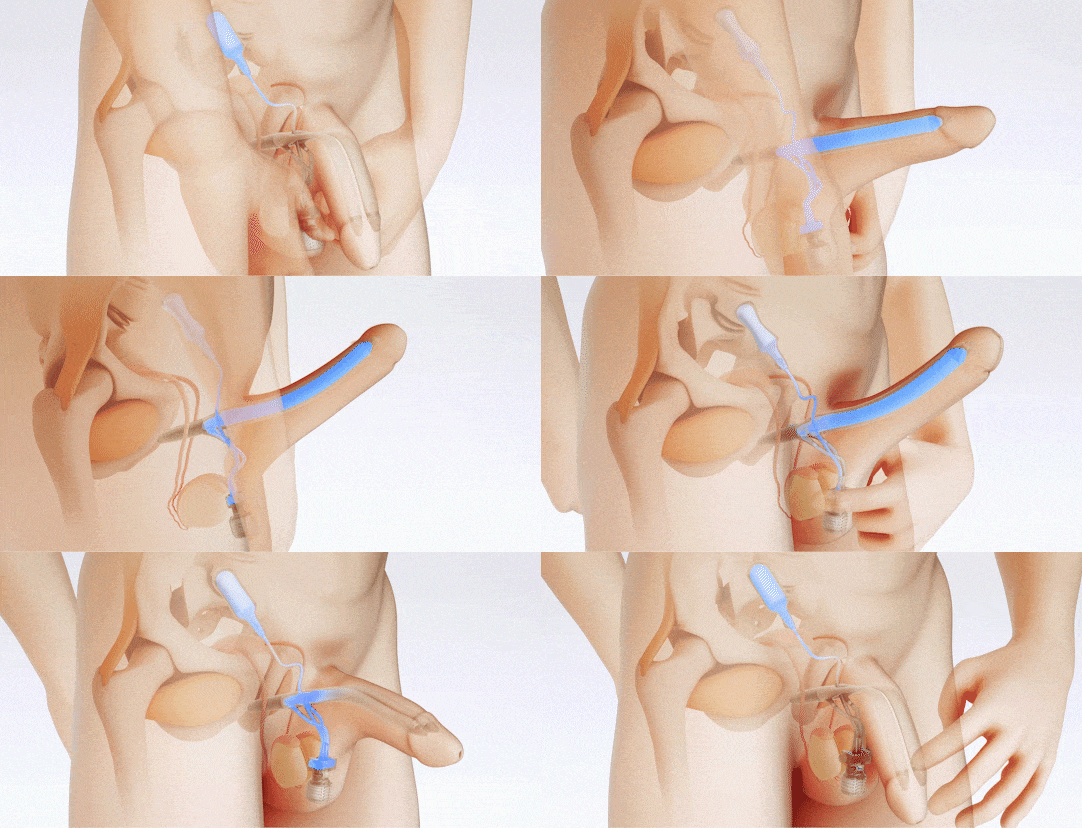
None of this means Rigicon is the right answer for every case. The next sections walk through exactly what Rigicon engineered, when those choices map to your situation specifically, and when Boston Scientific or Coloplast remains the better recommendation.
The goal is not to sell you on a brand. It is to give you the same clinical reasoning we use during consultation, so you can read the rest of this article knowing where the recommendation comes from before it arrives.
Engineering Choices That Matter in the Operating Room
Brand-versus-brand comparisons rarely change the recommendation we make during consultation. The implant that fits one patient is the wrong device for another, and the choice is anatomical, not promotional.
What is worth explaining instead is where Rigicon’s specific engineering decisions actually surface during surgery and in long-term follow-up, because that is the question the patient cannot answer from a manufacturer brochure.
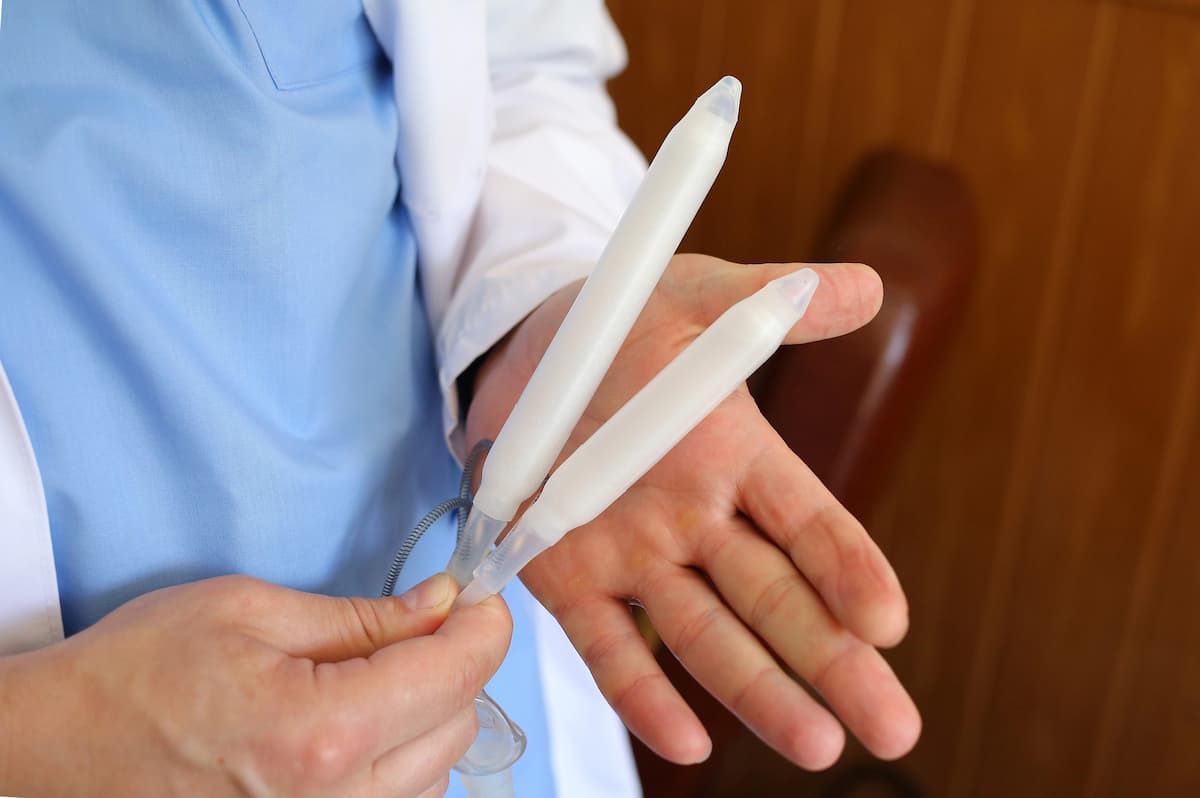
Three design choices separate Rigicon from the older platforms in current production:
- The Pulse pump’s grip threshold. Inflatable implants historically demanded grip strength older patients and diabetics no longer reliably had. The Pulse pump compresses with measurably less force, and the difference is not theoretical, it is the difference between a patient who completes inflation comfortably and a patient who stops halfway because the hand fatigues. AMS responded later with the TENACIO redesign; the engineering direction was the same.
- The AX cylinder expansion mechanism. The AMS LGX pioneered bidirectional expansion with a three-layer silicone construction. The Infla10 AX achieves the same expansion behavior through a different cylinder architecture, and in specific anatomies where the LGX physical profile does not fit, the AX often does. Both deliver 1 to 3 cm of length recovery over 6 to 12 months when the cycling protocol is followed.
- Lifetime device warranty. Coloplast offers similar lifetime cover on its inflatable line. AMS warranty terms are more defined, with documented revision policies but no lifetime guarantee. For a 50-year-old patient considering a fifteen-to-twenty-year implant horizon, the warranty structure becomes a real factor in the decision, not a marketing detail.
In our practice, approximately 75% of inflatable implants placed today are Rigicon devices. The reason is not that Rigicon is universally superior, because no single brand is.
The reason is that across the patient profiles we see most often, diabetic men, post-prostatectomy patients, men with mild grip loss, younger patients with long replacement horizons, Rigicon’s engineering iterations sit closest to the requirements that actually matter in daily life with the implant.
For the patients where Coloplast or AMS 700 is the stronger recommendation, we stock the full line and the conversation stays clinical, not commercial.
The "Newer Brand" Question
Rigicon entered the prosthetic urology market more recently than Boston Scientific or Coloplast, and if you are comparing brands you have probably already asked yourself whether that newness is a reason for concern. The question is fair. It is also a common reason patients quietly cross Rigicon off their shortlist before consultation, often without examining the assumption behind it.
The relevant question for you is not how long a brand has existed, but what each brand did with the engineering window it had. AMS 700 carries five decades of clinical refinement and the deepest peer-reviewed dataset in the field, which genuinely matters for you if you weigh long-term outcome studies heavily.
Coloplast Titan brings the strongest axial rigidity in current production, which matters if your case involves severe fibrosis. Rigicon brings bidirectional expansion (Infla10 AX), low-force pump operation (Pulse), hydrophilic antibiotic-absorbing coating (HydroShield), and a lifetime device replacement warranty, which matter for the specific clinical situations described in the next section.
What You Might Be Thinking
The Reality
None of these three brands is universally superior. The right brand for you depends on which engineering profile fits your anatomy, your hand function, your length goals, and your time horizon. Treating Rigicon as a lower-tier choice because it is younger misses what the company actually did with that engineering window, and may shift you away from the brand that genuinely fits your case.
The Rigicon Penile Implant Family
Rigicon manufactures four implant systems built around different clinical priorities. The breakdown below is a short orientation. The full mechanical detail for each device lives in the cluster guides linked at the end of this section, because the priority on this page is brand positioning rather than re-explaining the general inflatable and malleable categories.
| Model | Category | Clinical Position |
|---|---|---|
| Infla10 X (Pulse) | Three-piece inflatable | Standard inflatable choice for severe erectile dysfunction without length concerns. Pulse pump ergonomics make it the default Rigicon inflatable in our practice for patients with reduced grip strength. |
| Infla10 AX | Three-piece inflatable, bidirectional expansion | Length recovery cases. One of two implants on the market engineered for both length and girth expansion, alongside the AMS 700 LGX. Cycling protocol over 6 to 12 months is required to see measurable results. |
| Infla2P | Two-piece inflatable | For patients where a separate abdominal reservoir is anatomically risky, typically after major pelvic surgery or radical cystectomy. Self-contained system with scrotal pump and pre-connected components. |
| Rigi10 | Malleable | Patients with neurological conditions, severe hand dexterity loss, advanced corporal fibrosis where inflatable placement is risky, or those prioritizing zero mechanical maintenance. Diameter range 9 to 14 mm fits anatomies other malleables cannot. |
Is Rigicon the Right Choice for Your Case?
The engineering argument is only useful if it translates into a clear answer for your situation. The five profiles below cover where Rigicon delivers something the alternatives do not, or delivers the same outcome more reliably. If your case does not fit one of them, one of the other brands is probably the better recommendation, and the article will say so.

You Have Measurable Penile Shortening with Preserved Tissue Elasticity
If you have lost noticeable length over years of erectile dysfunction, or if shortening developed after radical prostatectomy, you are one of the strongest Infla10 AX candidates. The cylinder is engineered for bidirectional expansion, which means the device works alongside the tissue inside your erectile chambers to gradually recover lost dimensions over the first 6 to 12 months.
The condition is that the tissue itself needs enough elasticity to respond, which we check during physical examination before recommending the AX over a standard inflatable. If the tissue qualifies, the choice between the AX and the AMS 700 LGX comes down to pump preference and your surgeon’s experience with each platform.
You Have Reduced Hand Strength from Diabetes, Arthritis, or Age
If diabetic neuropathy has affected your fingers, if mild rheumatoid involvement makes squeezing tiring, if your grip has declined with age, or if you are recovering from a stroke with reduced but preserved dexterity, the Pulse pump is the reason Rigicon enters your conversation.
Standard inflatable pumps require sustained force that excludes these situations from inflatable candidacy entirely. The Pulse changes that calculation. Your alternative is the Coloplast Titan Touch, which offers one-touch deflation instead. Both work. The right one for you is decided by handling both samples during consultation.
You Have Had Major Pelvic or Abdominal Surgery
If your medical history includes radical cystectomy, kidney transplantation, complex hernia repair with mesh, or multiple prior pelvic procedures, the space behind your lower abdominal wall where a standard reservoir would sit is often compromised.
Placing one in altered anatomy carries elevated risk regardless of brand. The Rigicon Infla2P eliminates that step: the reservoir is integrated into the scrotal pump, the cylinders arrive pre-connected, and the surgery stays in the scrotum throughout. For this anatomy, Infla2P is often the only safe inflatable option you have.
Patients arrive at consultation having read about every brand online, and the comparison they bring is usually framed around feature lists. What matters during your examination is whether your tissue, your hand function, and your surgical history actually fit what the implant is engineered to do. Rigicon wins more of our cases than any other brand today, not because it markets better, but because the AX cylinder, the Pulse pump, and the Infla2P solve specific patient situations more cleanly than the alternatives.
Your Anatomy Sits at the Extreme Ends of Corporal Width
The Rigi10 malleable’s 9 mm to 14 mm diameter range is the widest in current production. If you have significant fibrosis or are undergoing revision surgery, the 9 mm option fits anatomies where standard rods would not enter the erectile chambers without forcing the tissue.
If your erectile chambers are wider than average, the 14 mm option fits where a standard 11 or 12 mm rod would sit loose and shift inside the tissue over time. Diameter mismatch is one of the more avoidable causes of malleable dissatisfaction, and the Rigi10’s range gives the surgeon options on the operating table that other malleable systems do not.
You Are Younger Than 60 with a 15 to 20 Year Time Horizon
Mechanical implants have a finite functional lifespan. Published literature places average inflatable survival between 10 and 20 years depending on activity level and device generation. If you are in your forties or early fifties at surgery, the probability of needing a replacement procedure during your lifetime is real, not theoretical.
The Rigicon lifetime device replacement warranty becomes meaningful here. Coloplast also offers lifetime coverage. AMS warranty terms are more limited. For younger patients, the warranty structure often shifts the recommendation toward Rigicon or Coloplast over AMS, with the final brand choice made on the other clinical factors above.
Rigicon vs AMS 700 vs Coloplast: The Clinical Comparison
Patients arrive at consultation with brand-versus-brand spreadsheets pulled from manufacturer websites, comparing warranties, coatings, and cylinder layers side by side. That comparison rarely changes the recommendation because the right brand is not determined by feature totals. It is determined by which clinical scenario the patient brings to the operating table. The table below shows how the three brands map to actual decisions we make during consultation.
| Clinical Scenario | Our Choice | Why |
|---|---|---|
| Length recovery is the primary goal | Rigicon Infla10 AX or AMS 700 LGX | The only two implants in current production engineered for bidirectional cylinder expansion. Choice between them depends on pump preference and surgical experience. |
| Severe corporal fibrosis or advanced Peyronie’s disease | Coloplast Titan | Bioflex polyurethane cylinders deliver the strongest axial rigidity in current production. The structural support holds up in dense scar tissue where softer cylinders deform. |
| Narrow corporal anatomy or revision with tight tissue envelope | AMS 700 CXR | Cylinder geometry purpose-built for restricted corporal width. The CXR remains the cleanest fit when standard 3-piece cylinders are too wide for safe placement. |
| Reduced grip strength (diabetes, arthritis, age) | Rigicon Pulse Pump or Coloplast Titan Touch | Both pumps engineered for low-force operation. Pulse offers the easiest grip. Titan Touch adds one-touch deflation. Final choice made by having the patient handle both samples. |
| Younger patient with a 15 to 20 year time horizon | Rigicon (lifetime device warranty) | Coloplast also offers lifetime device cover. AMS warranty is more limited. For patients with a long replacement-risk window, warranty structure becomes a real factor. |
| Prior major pelvic or abdominal surgery, retropubic reservoir risky | Rigicon Infla2P | The only modern two-piece system widely available, eliminating the abdominal reservoir step. Best inflatable option when a three-piece is anatomically unsafe. |
| Longest published clinical track record matters most | AMS 700 CX | 50+ years of platform refinement, 600,000+ devices implanted, the deepest peer-reviewed dataset in inflatable prosthetics. Track record is genuine here, not marketing. |
| Wide malleable diameter needed (9 mm or 14 mm) | Rigicon Rigi10 | Only malleable rod reaching 14 mm single-sided diameter, and the only one offering a 9 mm narrow option in the same family for fibrotic and revision cases. |
Rigicon is the right answer in 5 of the 8 scenarios above. That ratio reflects what the engineering window the company had to work with delivered, not a claim of universal superiority. AMS 700 remains the right answer when clinical track record depth matters most or when narrow corporal anatomy needs a CXR. Coloplast Titan remains the right answer when severe fibrosis demands maximum axial rigidity. The brand on the implant card matters far less than whether the implant fits the patient’s specific anatomy, hand function, and goals.
How the Decision Actually Gets Made
One patient arrived convinced he needed an AMS 700 LGX because length recovery was his primary goal. On examination, diabetic neuropathy had reduced sustained grip strength, and his lifestyle involved frequent cycling. The Infla10 AX addressed the same length concern, while the Pulse pump and Pulse Stat valve solved two additional problems he had not weighted heavily.
The recommendation changed, not because one brand was universally better, but because one platform matched more of the findings discovered during consultation. The brand on the implant card matters less than which clinical findings the platform happens to fit.
Composite scenario representative of common patient profiles in our practice.

The Lifetime Warranty: What It Actually Covers

Rigicon’s lifetime device replacement warranty is one of the frequently misunderstood features in the prosthetic urology market. You hear “lifetime” and reasonably assume that any future complication, replacement, or revision would be covered at no additional cost. The reality is narrower, and worth understanding before the warranty becomes part of your brand selection.
What the Warranty Does Cover
If your Rigicon device fails mechanically during your lifetime and the failure qualifies under the manufacturer’s review process, Rigicon provides a replacement implant at no device cost. This applies to cylinder failure, pump malfunction, tubing failure, reservoir leak, and other defined mechanical complications. The coverage is genuine and the device-replacement value is substantial, particularly given that inflatable implant devices alone can cost several thousand euros at manufacturer pricing.
The replacement device is provided through the registered surgeon and distributor process. Warranty registration happens at the time of surgery and remains valid regardless of where the patient lives afterward.
What the Warranty Does Not Cover
This distinction is the single most important warranty fact to understand before booking. The lifetime warranty covers the device, not the procedure that places it. If a complication develops years later, the replacement implant arrives free, but every other cost associated with the revision surgery remains your responsibility.
The lifetime warranty covers the device, not the procedure. Hospital fees, anesthesia, surgical fees, operating room costs, post-operative medications, hotel accommodation, and travel for any future revision surgery are not included. The replacement implant arrives free. The surgery to place it is billed normally.
A practical example: if you are 60 years old today and develop a mechanical complication 12 years from now, the replacement device arrives at no cost under warranty. The revision procedure itself, the anesthesia, the hospital stay, and the recovery support are billed normally at the rates applicable at that time. Revision surgery costs vary year over year and depend on case complexity, which is why our clinic does not publish a fixed revision figure today for a procedure that may happen a decade or more from now.
When the Warranty Genuinely Matters for You
The warranty becomes a meaningful factor in two specific situations. First, if you are under 60 with a 15 to 20 year forward time horizon, the statistical probability of needing a replacement procedure during your lifetime is real rather than theoretical. The warranty changes from a backstop you may never use into a structural feature of the brand that matters financially over time. Second, if you are comparing total cost of ownership across decades rather than only the initial procedure price, the device-replacement value compounds in a way that affects how the brands compare on long-term economics.
For patients in their late 60s or 70s with shorter replacement-risk windows, the warranty matters less, and your brand selection should be driven by anatomical fit and surgical considerations covered earlier in this article rather than by warranty structure. The warranty is one factor among several. It is not the deciding factor on its own, and any article or surgeon suggesting otherwise is selling a brand rather than recommending one.

Where to Learn More
Three topics that consistently come up alongside the Rigicon brand decision are covered in dedicated guides, because they apply to all penile implant patients rather than to Rigicon specifically.
The recovery timeline after Rigicon surgery follows the same pattern as any modern three-piece inflatable or malleable implant. Office work resumes within 10 to 14 days, sexual activity is cleared at the six-week mark, and the Pulse pump activation visit happens between weeks four and six. The full day-by-day picture, post-operative protocol, and warning signs are in our penile implant recovery timeline. For patients comparing total treatment investment across implant types, our penile implant cost guide covers what each package includes.
Brand selection is the conversation, not the conclusion. The Rigicon recommendation gets made after physical examination, review of medical history, evaluation of how elastic the tissue inside your erectile chambers still is, and honest discussion of what you actually need the implant to do for you over the next two decades. Your anatomy and goals decide the implant. The article narrows your options. The consultation finalizes the choice.
Frequently Asked Questions
Both cylinders are engineered for bidirectional expansion, and both deliver realistic length recovery of 1 to 3 centimeters over 6 to 12 months in patients with preserved corporal tissue elasticity. The mechanical principle is identical, the cycling protocol after surgery is the same, and the outcomes in our practice are clinically comparable. The honest difference is that the LGX has the longer published track record, having been on the market for years before the AX entered. The AX has the lifetime device warranty as a structural advantage and the Pulse pump for daily use. For most patients, the choice comes down to which pump system you handle more comfortably during consultation and which warranty structure matters more for your time horizon, not which cylinder works better.
If your hand weakness is mild to moderate, yes, the difference is meaningful. Standard inflatable pumps require sustained squeeze pressure that becomes tiring or painful with arthritic joints, diabetic neuropathy, or age-related grip decline. The Pulse pump reduces both the force needed per cycle and the sustained pressure during deflation. For patients who would have been excluded from inflatable candidacy a decade ago due to hand function, the Pulse is what brings the inflatable option back on the table. If your hand weakness is severe, where you cannot reliably squeeze any pump, the recommendation shifts away from inflatable entirely toward a malleable Rigi10 instead. The honest test happens during consultation when you physically operate the pump sample yourself.
Three situations push the recommendation toward AMS over Rigicon. First, if your corporal anatomy is narrow or you are undergoing revision surgery with a tight tissue envelope, the AMS 700 CXR cylinder is engineered specifically for that geometry and Rigicon does not have an equivalent. Second, if long-term published clinical data is the factor that gives you confidence in the device, AMS 700 carries 50+ years of refinement and the deepest peer-reviewed dataset in inflatable prosthetics. Third, if you have a strong preference for a brand your home urologist already works with for future follow-up, that familiarity has practical value. Outside these three situations, Rigicon usually delivers comparable or better clinical results, but a surgeon who recommends AMS to you in these specific scenarios is recommending it for the right reasons.
Honestly, less than it would matter at 50. The lifetime warranty becomes meaningful when there is a real statistical probability that the device will need replacement during your remaining lifetime. At 70, average implant survival of 15 to 20 years often exceeds the patient's own time horizon, which means the warranty becomes a backstop you may never need to use. At 50, the probability of needing a replacement procedure during your lifetime is real, and the warranty has tangible value. This is one of the few situations where age genuinely changes which brand argument applies to you. For older patients, brand selection should be driven by surgical fit and pump comfort, not warranty structure. Rigicon may still be the right choice for you at 70, but it should be chosen for clinical reasons rather than for the warranty.
Yes, with the right cylinder choice. For mild to moderate Peyronie's curvature where the corporal tissue retains elasticity, the Rigicon Infla10 X or Infla10 AX both work well, and the curvature can usually be corrected during the same surgery through intraoperative modeling without separate grafting. For severe Peyronie's with dense plaque or substantial structural curvature, the recommendation often shifts toward the Coloplast Titan or AMS 700 CX, because the Bioflex polyurethane cylinders in the Titan and the reinforced wall in the CX deliver stronger axial rigidity that handles dense scar tissue more reliably. Rigicon is not the wrong answer for Peyronie's. It is the right answer for the milder end of the Peyronie's spectrum, and a clear conversation about the severity of your case during examination decides which platform fits.
The warranty registration happens at the time of surgery, with your unique device serial number recorded in the manufacturer's database under your name and date of placement. You leave the clinic with an implant card carrying the serial number, model, and registration date. If a mechanical complication occurs years later, the warranty is validated through this registration regardless of where you live. You would coordinate the replacement through a qualified prosthetic urologist in your country, and the replacement device is shipped through Rigicon's distributor process. The warranty covers the device cost only. Hospital fees, surgical fees, and travel costs for the revision procedure remain your responsibility, which is the same condition that applies to Coloplast's lifetime program.
In some cases, yes. If your original Infla10 X failed mechanically and your clinical situation has not changed, the typical replacement is the same model under warranty. If your situation has changed in ways that suggest a different Rigicon model would now serve you better, the revision can incorporate that change. Examples include moving from an Infla10 X to an Infla10 AX because length concerns developed over time, or moving from an inflatable to a Rigi10 malleable because hand function has declined since the original surgery. The warranty covers the device replacement value. The additional clinical decision about which Rigicon model fits your current situation is made during pre-revision examination, not by the warranty paperwork.
Probably not. If decades of peer-reviewed long-term outcome data is the factor that matters most to you, the AMS 700 platform has the deepest dataset in inflatable prosthetics, with 50+ years of clinical refinement and 600,000+ devices implanted worldwide. Rigicon entered the market more recently, and its long-term data, while strong and growing, does not yet match the AMS volume. This does not mean Rigicon is the wrong choice. It means your priority points toward AMS for this specific reason, and that priority is legitimate. The article has been clear about when Rigicon is the right recommendation and when an alternative brand is. If track record depth is your decisive factor, the alternative is AMS 700, and our surgical team will recommend it directly.
Conclusion
Rigicon entered prosthetic urology more recently than Boston Scientific or Coloplast, and that newness is the question worth asking, not a reason to dismiss the brand. The engineering window the company had was used to refine what older platforms had not fully resolved.
That is why Rigicon now sits at the top of our inflatable case mix, and also why it is not the right answer for every case. AMS 700 remains the recommendation when track-record depth or narrow corporal anatomy drives the decision. Coloplast Titan remains the recommendation when severe fibrosis demands maximum axial rigidity. The brand is decided during examination, not from a website.
If you are weighing implant options for yourself or someone close to you, the next step is a direct conversation with a surgeon who places all three brands and will tell you honestly which one fits your case.