

Artificial urinary sphincter implantation is the gold standard treatment for men who continue to experience urinary leakage after prostate removal. The cancer is gone, but the body has lost something it relied on: a functioning urethral closing mechanism. For many men, that loss defines daily life more than the cancer ever did.
The patients arriving at this stage are not dealing with minor inconvenience. They are using multiple pads a day, planning their movements around bathroom access, and withdrawing from social situations they previously took for granted. Pelvic floor exercises and conservative management have their place, but when incontinence is moderate to severe and persistent, they are not enough.
The goal at that point is mechanical: restore reliable urinary control. This guide covers how the artificial urinary sphincter works, which patients are suitable candidates, and what the surgery and long-term results realistically look like.
- Who Needs an Artificial Urinary Sphincter?
- Who Is Not a Good Candidate?
- How the Artificial Urinary Sphincter Works
- Artificial Urinary Sphincter Surgery
- Recovery After Artificial Urinary Sphincter
- Expected Results After AUS Surgery
- Decision-Making: When Is the Right Time?
- Artificial Urinary Sphincter Risks
- Urinary Incontinence with Erectile Dysfunction
- Dual Implantation: AUS + Penile Implant
- Mini-Jupette Sling: For Leakage During Sexual Activity
- Two Internationally Used Artificial Urinary Sphincter Devices
- Device Lifespan
- Summary
- Who Needs an Artificial Urinary Sphincter?
- Who Is Not a Good Candidate?
- How the Artificial Urinary Sphincter Works
- Artificial Urinary Sphincter Surgery
- Recovery After Artificial Urinary Sphincter
- Expected Results After AUS Surgery
- Decision-Making: When Is the Right Time?
- Artificial Urinary Sphincter Risks
- Urinary Incontinence with Erectile Dysfunction
- Dual Implantation: AUS + Penile Implant
- Mini-Jupette Sling: For Leakage During Sexual Activity
- Two Internationally Used Artificial Urinary Sphincter Devices
- Device Lifespan
- Summary
Key Points
- The artificial urinary sphincter is the most effective treatment available for moderate to severe urinary incontinence after prostate removal surgery.
- The device recreates a functional closing mechanism around the urethra, stopping leakage mechanically rather than relying on weakened muscle tissue.
- Most patients achieve a major reduction in pad use or become completely dry following activation.
- The device is activated four to six weeks after surgery, once the surrounding tissue has healed.
- For patients managing both urinary incontinence and erectile dysfunction, an artificial urinary sphincter and a penile implant can be placed during the same surgical procedure.
Who Needs an Artificial Urinary Sphincter?
Not every man who leaks after prostate removal is ready for an artificial urinary sphincter immediately. The first question is always whether the body still has room to recover on its own.
![]()
In the months following prostate removal, the neurological and muscular structures involved in urinary control are still adapting. Many patients regain meaningful continence during this period, particularly those who commit to consistent pelvic floor training. Operating too early means intervening before that natural recovery has had a chance to complete. We wait.
When leakage persists beyond that recovery window without measurable improvement, the evaluation shifts. At that stage, we are no longer waiting. We are assessing whether surgical restoration is appropriate. That assessment centers on three things.
The first is pad count. Three or more pads per day, consistently, indicates moderate to severe incontinence. One or two on difficult days is a different picture from three or more as a baseline.
The second is leakage pattern. Leakage triggered only by coughing or heavy lifting reflects a different level of sphincter weakness than leakage that occurs while walking, standing, or at rest. The pattern tells us how much closing function remains.
The third is response to conservative treatment. If structured pelvic floor rehabilitation has produced no meaningful improvement, muscle weakness alone is not the full explanation. Something more is driving the incontinence.
The typical candidate for an artificial urinary sphincter has undergone radical prostatectomy, has had sufficient recovery time without adequate improvement, has no severe uncontrolled bladder dysfunction complicating the picture, and retains enough hand dexterity to operate the device pump independently.
Who Is Not a Good Candidate?
Selecting the right patients for an artificial urinary sphincter matters as much as the surgery itself. There are situations where implanting the device would be the wrong decision, and identifying those situations early is part of getting the outcome right.

Men with poorly controlled neurogenic bladder dysfunction are not suitable candidates. When the primary problem is the bladder itself rather than the urethral closing mechanism, placing a sphincter device does not address the actual pathology. Bladder function must be stabilized before any surgical implant is considered.
Significant cognitive impairment is another disqualifying factor. Operating the device requires the patient to understand when and how to activate the scrotal pump. If that understanding is not reliably present, the device cannot be used safely or consistently.
Hand dexterity matters for the same reason. The pump sits in the scrotum and must be compressed manually to allow urination. Patients with limited hand function due to neurological conditions, arthritis, or other causes may find independent use difficult or impossible.
Any active urinary tract infection must be fully resolved before surgery. Implanting a device into an infected field increases the risk of device infection substantially, and a device infection almost always means explantation. Surgery is postponed until the infection has cleared completely.
For men with mild stress urinary incontinence, particularly leakage triggered only by exertion, a male sling is often a more appropriate first intervention. It is a less complex procedure suited to less severe incontinence, and for the right patient it produces good results without the mechanical demands of a full sphincter device.
How the Artificial Urinary Sphincter Works
After prostate removal, the bladder itself usually continues to function normally. What changes is the closing mechanism. The natural sphincter muscle that kept the urethra sealed weakens during surgery, and without that valve, urine escapes during everyday activity: walking, standing, coughing, lifting.
The bladder is not the problem. The issue is the loss of the natural seal that keeps urine contained. The artificial urinary sphincter is designed to replace that seal mechanically. It does not alter bladder function, does not interfere with the nerves that signal the urge to urinate, and does not change the sensation of needing to go. It simply recreates the closing function the surgery disrupted.
![]()
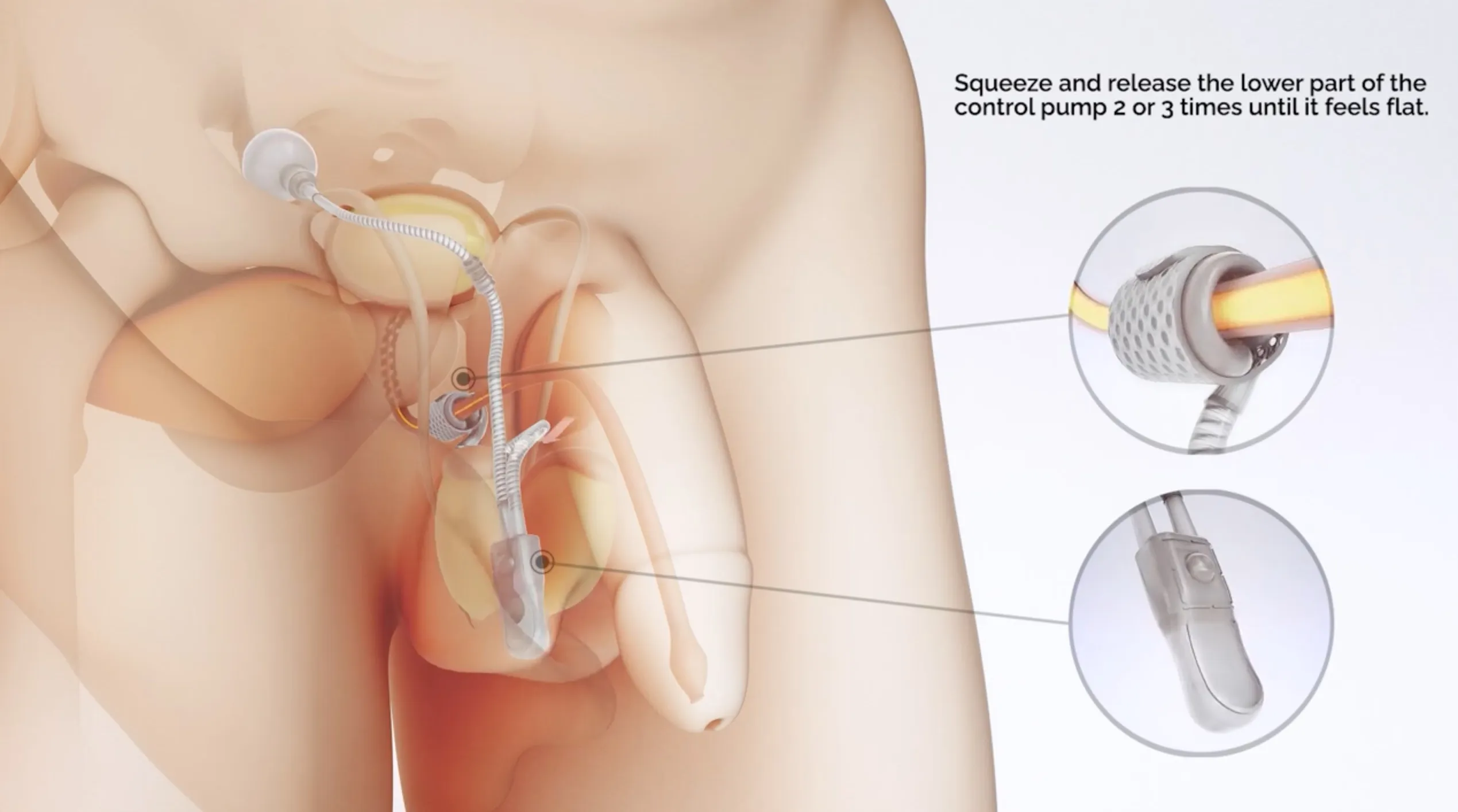
The device operates as a closed fluid system with three components:
- The cuff is a soft silicone band placed around the urethra. When fluid fills the cuff, it applies controlled pressure that keeps the urethra closed and prevents leakage between urinations.
- The scrotal pump sits inside the scrotum, invisible from the outside and positioned where the patient can reach it easily with his fingers. Pressing the pump is the only action required to urinate.
- The pressure-regulating balloon is placed in the lower abdomen. It maintains the correct fluid pressure throughout the system and ensures the cuff applies consistent, appropriate force without over-compressing the urethra.
When the patient needs to urinate, he squeezes the scrotal pump for a few seconds. Fluid transfers from the cuff into the balloon, the cuff opens, and urine passes normally. After one to two minutes, the fluid returns to the cuff automatically. The urethra closes again without any further action from the patient.
The urge to urinate remains completely intact, because the device works at the urethra, not the bladder. The sensation is normal. The timing is controlled by the patient. The closing happens on its own.
Artificial Urinary Sphincter Surgery
Surgical planning for an artificial urinary sphincter starts long before the procedure itself. The implant is not standardized. Cuff size, placement position, and surgical approach all depend on the individual anatomy and medical history of each patient.
Pre-operative evaluation focuses on the urethral tissue directly. Our team assesses thickness, elasticity, scarring from previous surgeries, and whether radiation therapy has been part of the patient’s cancer treatment. These factors determine where the cuff can be safely placed and how much pressure the surrounding tissue can tolerate over the long term.
![]()
The central surgical challenge is calibration. The cuff must compress the urethra enough to prevent leakage during daily activity, but not so much that it damages the tissue over time. That balance is what makes cuff placement the most technically demanding part of the procedure, and the part where experience has the greatest influence on outcome.
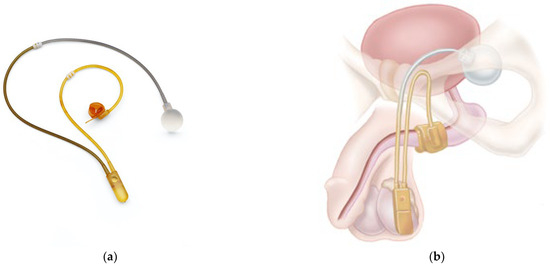
Once the cuff is positioned around the urethra, it is connected to the pressure-regulating balloon placed in the lower abdomen. The scrotal pump is then positioned where the patient can reach it comfortably with his fingers. The routing and positioning of each component is planned so the system functions smoothly in daily use without causing discomfort.
Patients who have received radiation therapy require additional surgical care. Irradiated tissue is less resilient, more prone to erosion, and carries a higher risk of complications if the cuff is placed without accounting for those changes. The technique adjusts accordingly, but the threshold for what the tissue can withstand is lower, and that has to be respected. The European Association of Urology guidelines recommend artificial urinary sphincter implantation as the preferred surgical option for moderate to severe post-prostatectomy stress incontinence.
A completed surgery is not the measure of success. The measure is a device that activates correctly, controls continence reliably, and continues functioning safely for years without revision.
Recovery After Artificial Urinary Sphincter
Recovery follows two distinct phases: tissue healing around the implanted components, then learning to use the device once it is activated. Both take time, and neither should be rushed.
Early Healing
Swelling and mild discomfort around the scrotum and lower pelvis are expected as a normal response to the surgical dissection. Rest during the first week, but light walking is encouraged from early on. Movement supports circulation and recovery.
Return to Light Activity
Most patients return to light daily routine within this window. Heavy lifting, strenuous exercise, extended sitting on hard surfaces, and long drives should still be avoided. The tissue around the cuff needs time to stabilize without additional mechanical stress.
Tissue Healing & Activation
The device remains deactivated during this window while urethral tissue heals around the cuff. Activating too early risks disrupting that process. More demanding physical activity is gradually resumed. At the end of this phase, the activation visit takes place during a clinic appointment with no anesthesia required.
Daily Use
The patient is shown how to operate the scrotal pump directly, with hands-on guidance rather than written instructions alone. Most patients are operating the device confidently within a few days. It becomes a routine part of going to the bathroom rather than something that requires conscious effort.
Expected Results After AUS Surgery
Clinical success rates tell part of the story. What most patients actually want to know is simpler: will they be able to leave the house without a pad, sit through a meal without anxiety, or return to work without planning their day around a bathroom schedule. Those are the outcomes that matter, and they are what the device is designed to deliver.
| Outcome Area | What Patients Can Often Expect | Important Note |
|---|---|---|
| Urinary Control | Significant continence improvement following device activation in most patients. | The target is reliable daily control, not necessarily zero leakage in every circumstance. |
| Pad Use | Most patients reduce to one light security pad or none at all during normal daily activity. | Outcomes depend on incontinence severity, bladder function, and tissue quality at the time of surgery. |
| Daily Life | Return to normal activities without planning around leakage. Confidence in social and physical situations is restored for most patients. | Meaningful improvement in daily function is the realistic goal, even when full dryness is not achieved. |
| Timing of Improvement | Results become apparent shortly after activation, four to six weeks after surgery. | The deactivation period is not a delay; it is necessary for urethral tissue to heal around the cuff before the device can function safely. |
The change most patients describe after activation is not gradual. Moving from constant leakage to controlled urination is a shift that registers immediately in daily life, in how they sleep, how they dress, how they move through public spaces, and how much mental energy the problem was consuming without them fully realizing it.
The device does not always produce complete dryness in every situation. It reliably produces control, and for most men, control is what changes everything. The goal discussed with patients before surgery is not an ideal outcome in optimal conditions. It is stable, practical urinary control that removes leakage as a constant preoccupation.
Patient Scenario
Background: Patient arrives more than a year after radical prostatectomy. Has been doing pelvic floor exercises consistently. Still using three to four pads daily.
Clinical reasoning: The physical situation is clear on evaluation. Equally apparent is the cumulative toll of living with it. Leakage at that level reshapes how a man moves through his day, what he agrees to do, and how he feels about himself.
Outcome after implantation and activation: Reduction from multiple pads daily to one light pad or none at all during normal activity. What the patient consistently reports as the most significant change is not the pad count. It is no longer having leakage as a background concern every hour of the day.
Decision-Making: When Is the Right Time?
Timing the implantation of an artificial urinary sphincter correctly is as important as the surgery itself. Operate too early and the device may be unnecessary; the body was still recovering. Wait too long and the patient spends years managing a condition that has already stabilized and will not improve on its own.
In the months following prostate removal, nerve and muscle recovery is still possible, particularly in patients who are consistent with pelvic floor rehabilitation. That window deserves time. When leakage continues beyond six to twelve months without meaningful improvement, the closing mechanism has reached its recovery ceiling. Further waiting produces further waiting, not better continence.
At that point, pad count alone does not determine whether surgery is the right step. What matters equally is what the leakage is costing the patient. Men who have stopped traveling, stopped attending long meetings, stopped accepting social invitations because the logistics of leakage have become unmanageable are not living with a minor inconvenience. They are living around a medical problem that has a solution.
When the incontinence pattern has stabilized and daily life is being structured around it, implanting an artificial urinary sphincter is not a rushed decision. It is the appropriate one. For patients who have reached this point, the complete artificial urinary sphincter surgery process covers what evaluation, surgery, and recovery involve in practice.
Artificial Urinary Sphincter Risks
Every surgical implant carries risks, and the artificial urinary sphincter is no exception. Understanding them clearly before surgery is not a reason to avoid the procedure. It is the foundation of an informed decision.
Infection is the most consequential risk. The overall rate is low in centers that follow strict sterile protocols and screen patients carefully beforehand, but when it occurs, it typically requires removal of the device to protect the surrounding tissue. For this reason, blood sugar control and the absence of active infection are confirmed before any implant surgery proceeds.
Erosion occurs when the cuff gradually affects the urethral tissue it surrounds. It is uncommon, but the risk is higher in patients who have had pelvic radiation therapy or whose tissue quality was already compromised before surgery. Correct cuff sizing and precise placement are the primary defenses against it.
Mechanical failure is an inherent feature of any implanted device used daily over many years. Components can wear, connections can degrade, and at some point revision surgery may be needed. This is not a treatment failure. It is the expected lifecycle of a mechanical system, and most patients reach that point well over a decade after implantation.
Regular follow-up after activation allows early detection of any developing issue. Problems identified early are almost always simpler to manage than those that present late.
Urinary Incontinence with Erectile Dysfunction
Prostate removal surgery can affect two separate functions simultaneously: urinary control and erectile function. The nerves responsible for erection run alongside the prostate, and surgical damage to those nerves is common. When both problems are present, treatment planning requires a different approach than managing either condition in isolation.

The central question is not simply how to treat the leakage, but whether both conditions should be addressed within the same treatment plan. When leakage is present throughout the day, during walking, standing, sitting, and sexual activity, a penile implant alone does not solve the problem. It restores erectile function. It does not control urine loss. Treating only one problem while leaving the other unaddressed produces an incomplete result.
When both problems are confirmed, the most complete solution is to treat them together. An artificial urinary sphincter manages urinary control, while a penile implant restores erectile function.
The two devices occupy different anatomical territories, one around the urethra and one inside the erectile chambers, which means they can be implanted without mechanical interference when the surgical planning is done correctly. The recovery curve, rehabilitation protocol, and decision points for erectile dysfunction after prostate surgery are covered separately in our complete guide to erectile dysfunction after prostatectomy.

Dual Implantation: AUS + Penile Implant
An artificial urinary sphincter and a penile implant can be placed during the same surgical procedure. This is known as dual implantation. For appropriate candidates, combining both procedures into a single operation avoids two separate anesthesia events and two separate recovery periods.
The decision to combine versus stage the procedures is not automatic. Tissue condition, prior radiation therapy, and a history of multiple pelvic surgeries all increase complication risk and may make staged surgery the safer choice. Each case is assessed on its own merits before a recommendation is made.
One technical consideration requires deliberate planning in dual implantation: both devices include a scrotal pump. The position of each pump must be arranged so the patient can reliably distinguish between them and operate each one correctly in daily use. Getting that spatial planning right during surgery is what makes the system practical rather than confusing after recovery. Device-specific considerations for the inflatable implant component are covered in our penile implant surgery guide.
Dual implantation is offered only after a thorough evaluation of the patient’s anatomy, surgical history, and functional goals. A successful operation is only part of the outcome. The other part is two devices the patient can use simply and confidently every day.
Mini-Jupette Sling: For Leakage During Sexual Activity
Not every patient with post-prostatectomy leakage has the same problem. Some men maintain normal bladder control throughout the day but experience leakage specifically during erection or sexual activity. This is known as climacturia, and it occurs because the urethral closing mechanism weakens under the mechanical pressure of an erection.
When leakage is confined to sexual activity and daily continence is otherwise intact, a full artificial urinary sphincter is not the appropriate solution. The correct intervention is a simpler one: the Mini-Jupette Sling, performed at the same time as penile implant surgery.
The sling is a small supportive strip placed beneath the urethra and attached to the cylinders of the penile implant. When an erection occurs and the cylinders inflate, the sling tightens naturally around the urethra, providing additional support precisely when it is needed. There is no separate mechanical system, no additional pump to operate, and no pressure regulation component. The sling works passively, using the erection itself as the trigger.
The advantage is proportionality. The Mini-Jupette addresses a specific and limited problem without adding the complexity of a full continence device. The distinction between daily urinary incontinence and climacturia is one of the first things established before any surgical plan is discussed. The two conditions look similar from the outside and require completely different responses.
Two Internationally Used Artificial Urinary Sphincter Devices
The choice of device matters in ways that extend beyond the operating room. An artificial urinary sphincter is a mechanical system that will function inside the body daily for many years. Manufacturing quality, engineering consistency, and long-term clinical data are not secondary considerations. They are the basis on which the decision should be made.
Two manufacturers produce artificial urinary sphincter systems used in experienced urology centers worldwide for post-prostatectomy incontinence: Boston Scientific (AMS 800) and Rigicon (ContiClassic and ContiReflex).
Boston Scientific – AMS 800
The AMS 800 from Boston Scientific is the most extensively studied artificial urinary sphincter in clinical use. It has been implanted for decades across urology centers worldwide, and its long-term performance is supported by more follow-up data than any comparable device in this category.
The system is designed to maintain consistent, balanced pressure around the urethra, controlling leakage without over-compressing the surrounding tissue. Its longevity in clinical practice means that surgeons who work with it regularly have extensive familiarity with how it behaves across different anatomies, tissue qualities, and patient histories. That accumulated experience translates directly into surgical precision and better outcomes.
Rigicon – ContiClassic and ContiReflex
Rigicon manufactures two artificial urinary sphincter models: the ContiClassic and the ContiReflex. Both share engineering refinements developed to address known limitations of older sphincter designs, and the choice between them depends on the clinical profile of the individual patient.
The ContiClassic shares the core architecture of established sphincter designs but introduces several refinements: a hydrophilic device coating, a wider range of cuff sizes in 0.25 cm increments for more precise fit, and connectors that simplify intraoperative assembly. For most candidates with standard post-prostatectomy incontinence and good tissue quality, the ContiClassic delivers reliable continence control with these incremental engineering improvements.
The ContiReflex adds one further component that the ContiClassic does not have: a secondary stress relief balloon. This balloon adapts the pressure applied to the urethra in response to sudden increases in abdominal pressure, the kind produced by coughing, lifting, or strenuous activity. In patients whose leakage pattern includes significant stress-driven episodes, the ContiReflex is the device engineered to handle those moments more responsively.
Comparative device design and the engineering rationale behind the Conti platform are detailed in a peer-reviewed analysis published in Translational Andrology and Urology.
Device selection is decided case by case, based on urethral tissue quality, previous radiation therapy, incontinence severity, leakage pattern, and the patient’s overall anatomy. The right device for one patient is not automatically the right device for another. What determines the outcome is not which brand is implanted, but whether the correct system was chosen for that specific patient and placed with the surgical precision the procedure demands.
Device Lifespan
The question patients ask most consistently once they understand the procedure is straightforward: how long will the device last?
An artificial urinary sphincter is a mechanical hydraulic system. Like any implanted mechanical device used daily, components wear over time. The average functional lifespan across long-term clinical studies is eight to twelve years, with many devices continuing to function beyond that range. When a component eventually requires adjustment or replacement, that is not a treatment failure. It is the expected lifecycle of a mechanical implant.
Several factors influence how long any individual device performs: urethral tissue quality, prior radiation therapy, and the precision of the original surgical placement. These are the same variables that affect every other outcome in this procedure.
Both manufacturers provide warranty coverage for mechanical device failure. The AMS 800 carries a five-year manufacturer warranty. The Rigicon Conti systems carry warranty coverage under the company’s terms. Warranties cover the device itself in the event of a technical malfunction. Surgical procedures required to replace or reposition a component are separate medical procedures and are not included.
If revision surgery becomes necessary years down the line, the process follows well-established protocols and is manageable in experienced hands. For most patients, the more relevant number is not the eventual revision date. It is the decade or more of reliable urinary control that precedes it.
Frequently Asked Questions
Yes. The artificial urinary sphincter can be removed surgically if a serious complication occurs, such as infection or erosion. Removal returns the patient to their pre-implant state of incontinence. After healing, a new device can usually be implanted, although the timing and approach depend on the reason for the original removal.
Summary
Urinary incontinence after prostate removal is not a minor side effect. For men who spend months or years managing constant leakage, planning their day around pad changes, and withdrawing from situations they used to take for granted, it is the condition that defines life after cancer treatment. The cancer is behind them. The incontinence is not.
When conservative management has had adequate time and produced inadequate results, continuing to wait is not a neutral decision. It is a choice to tolerate a problem that has a well-established solution.
The artificial urinary sphincter is the most effective treatment available for moderate to severe post-prostatectomy incontinence. It does not rely on weakened tissue or incomplete nerve recovery. It recreates the closing mechanism mechanically, and it works independently of whatever damage the surgery caused.
The outcome depends on getting three things right: accurate diagnosis, appropriate patient selection, and precise surgical technique. For most patients who reach the right treatment at the right time, what changes is not just pad count. It is the ability to stop organizing life around a medical problem and start living it again.